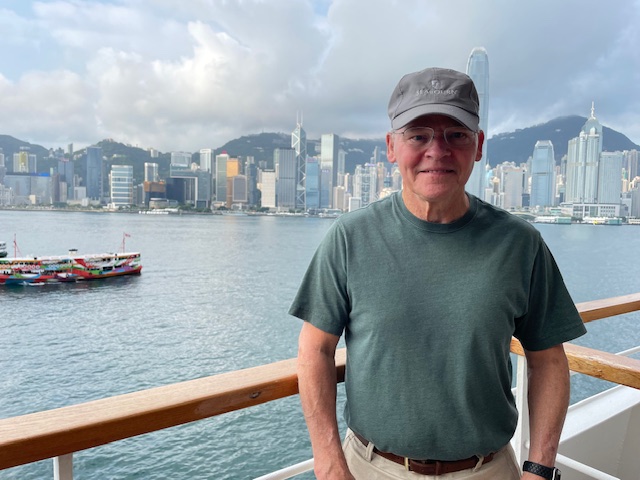
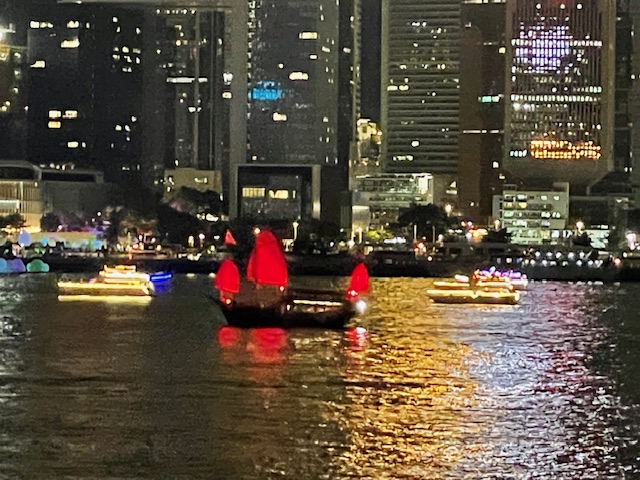
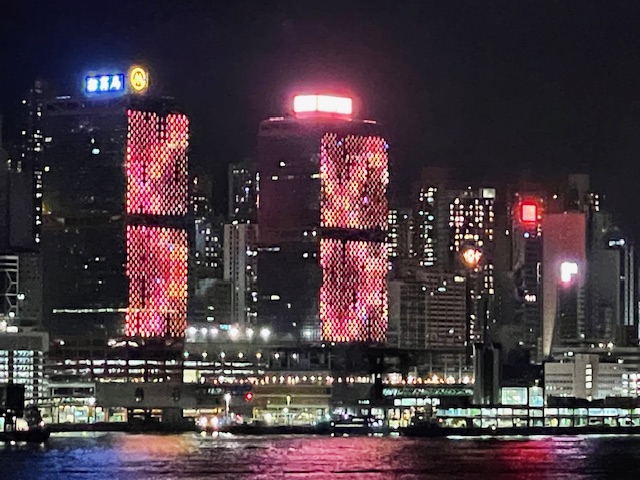
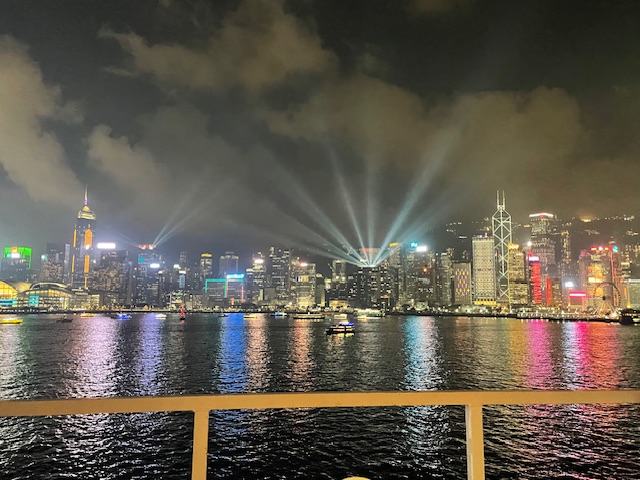
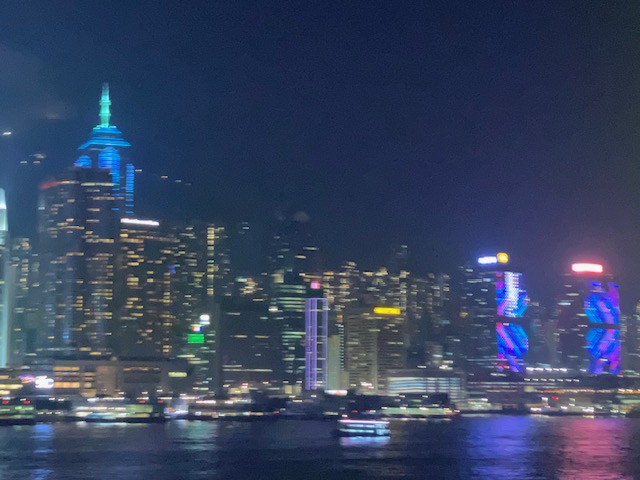
We arrived in Hong Kong in the evening of Apr 13, 2024, and docked on the Kowloon Peninsula across from Hong Kong Island. It was an amazing sight to see the lights of this vibrant city.

Hong Kong was established as a colony of the British Empire after the Qing Empire ceded Hong Kong Island in 1841-1842. The colony expanded to the Kowloon Peninsula in 1860 and was further extended when the United Kingdom obtained a 99-year lease of the New Territories in 1868. Hong Kong was occupied by Japan from 1941 to 1945 during World War II. The entire territory was transferred from the United Kingdom back to China in 1997.
Hong Kong maintains separate governing and economic systems from that of mainland China under the principle of “one country, two systems”. It is treated as a special administrative region of the People’s Republic of China, with a population of 7.4 million people in a territory of 1,100 square-kilometers. It is one of the most densely populated territories in the world.
Hong Kong is the world’s fourth-ranked global financial center, the ninth-largest exporter, and the eight-largest importer in the world. Its currency, the Hong Kong dollar, is the most traded currency in the world. It is the home of the second-highest number of billionaires in the world. But what it lacks is property, which is the reason for so many tall buildings on Hong Kong Island, Kowloon and the New Territories, most of which contain housing units (condominiums or rental apartments) for the country’s residents.
On Apr 14, 2024 we took an excursion that initially took us through the Cross Harbor Tunnel to Hong Kong Island, and then up the Peak Tram, a steep tram that was built over 100 years ago, to Victoria Peak from which we had a great view of Victoria Harbor, Kowloon and the New Territories.

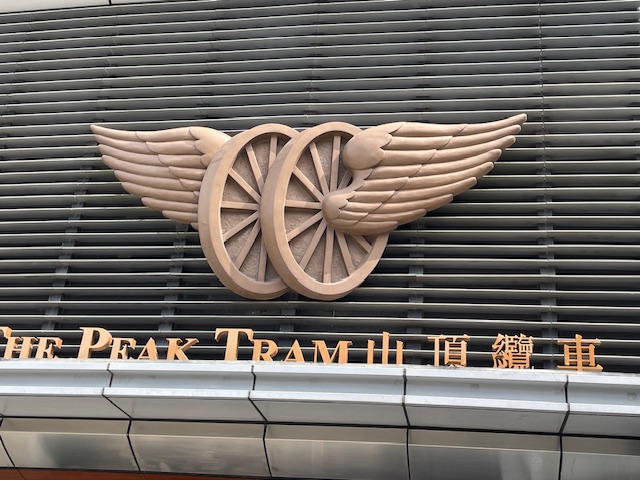
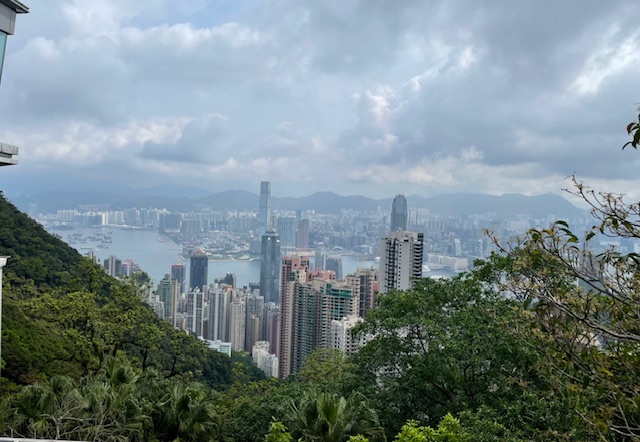


Then we drove to Repulse Bay on the island’s southern shore where magnificent mega-million dollar homes line the roadway of this residential area. We continued on to Aberdeen, where we boarded a sampan for a cruise through the local harbor which includes the remains of a floating village of fishermen and their families, intermingled with expensive yachts.

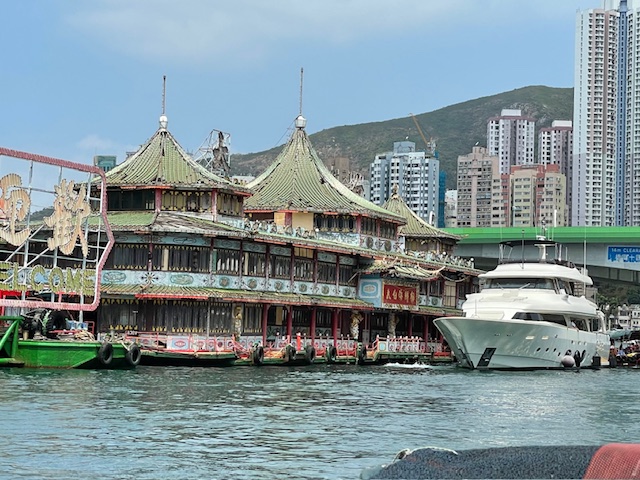

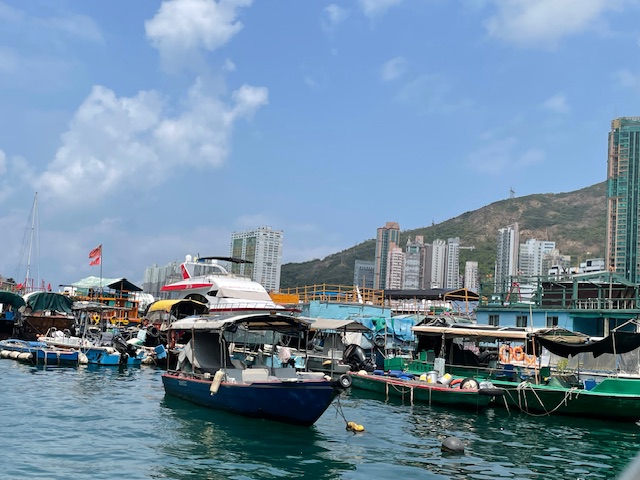
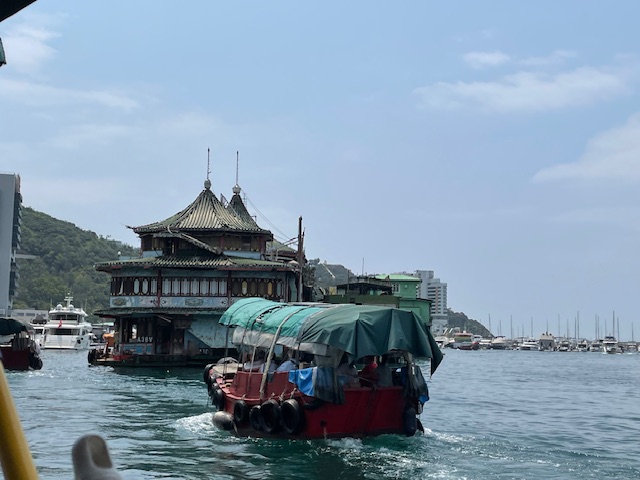
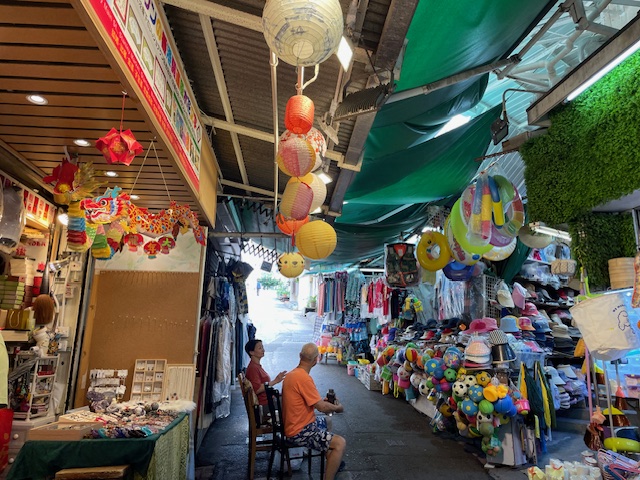
Our next stop was at the busy open-air Stanley Market, with its narrow lanes lined with small shops selling silks, luggage, knock-offs and souvenirs. It was an interesting place just to walk through and experience the local Hong Kong retail culture.



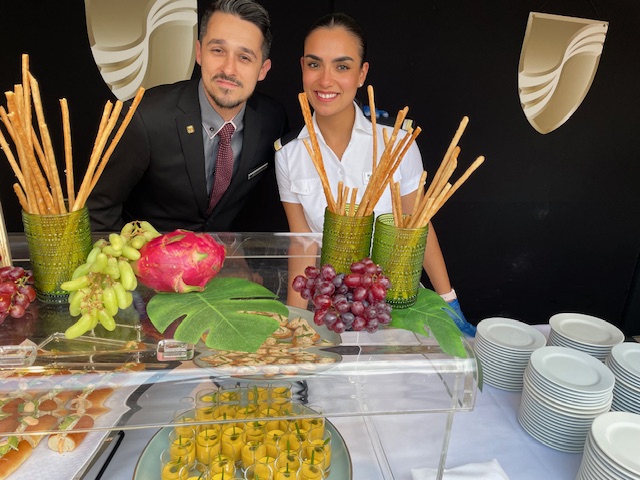
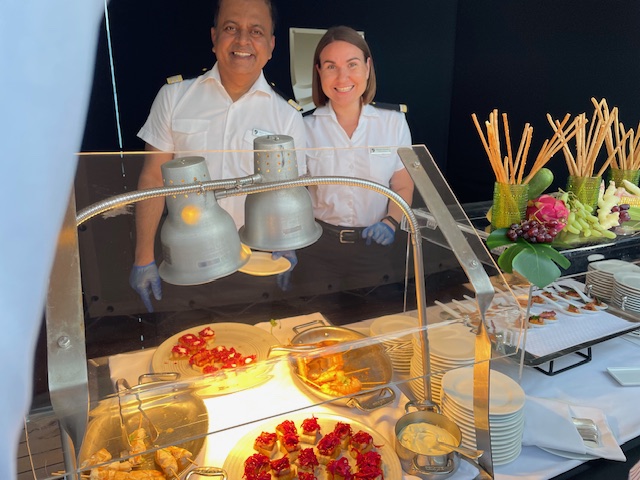
We returned to the ship and spent the afternoon enjoying a special Epicurean event during which the ship’s officers served great food and drinks by the pool.

Later in the evening, we had dinner on the aft deck and, from our table, enjoyed a light show on Hong Kong Island that is presented each night at 8:00 P.M. It was a great way to end our first day in Hong Kong.






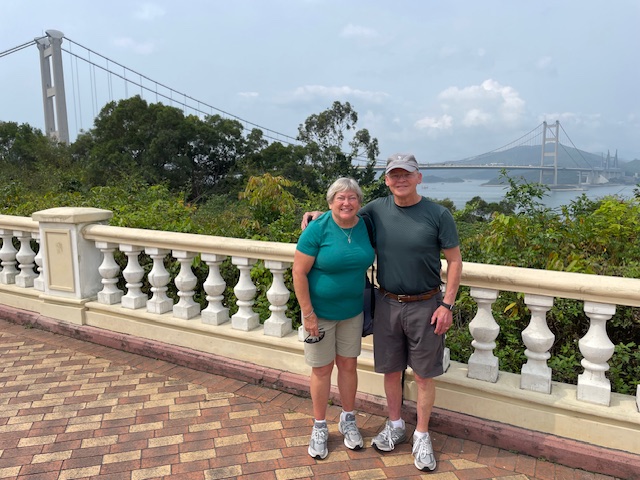
On Apr 15, 2024 we took another excursion, this time to Lantau Island, Hong Kong’s largest island. To get there we crossed the world’s longest suspension bridge that includes both auto and rail traffic — the Tsing Ma Bridge, which is 1.47 km in length.

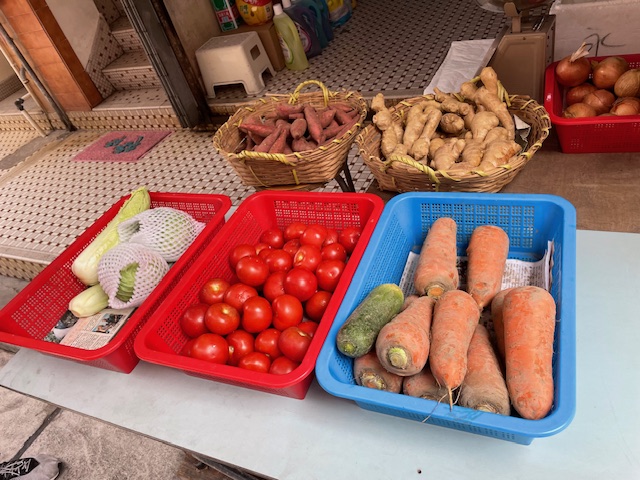
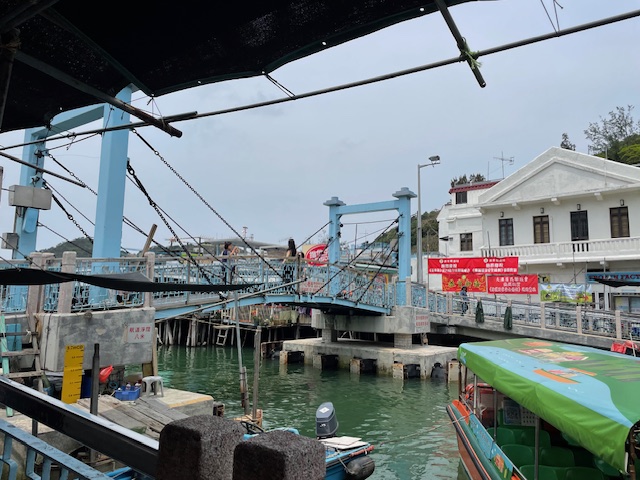
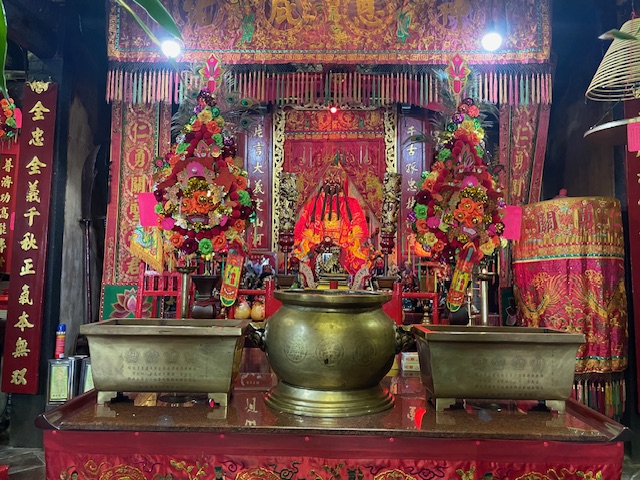
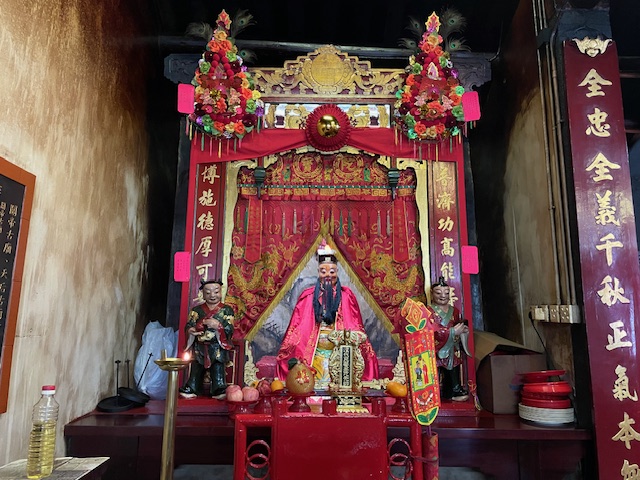
Then we stopped at Tai O, a small fishing village with traditional stilt houses and fishing shanties along the water’s edge. We had time to walk through the village and see some of the local retail shops, vegetable and fish stalls, and an old temple.



We continued on our excursion by driving to the Po Lin (Precious Lotus) Monastery, atop a mountain in the island’s interior. Nearby is the world’s tallest outdoor Buddha statue, the Tian Tan Buddha. The bronze figure is more than 100 feet high and weighs more than 275 tons.


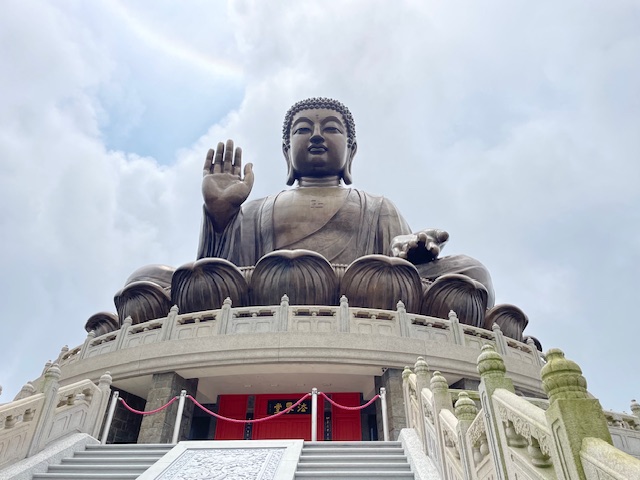

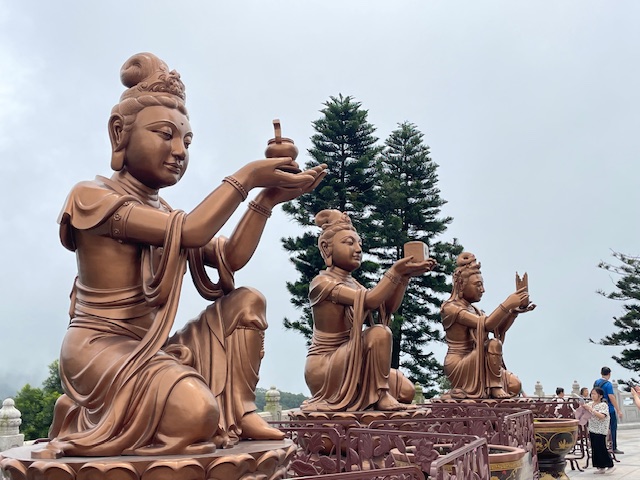
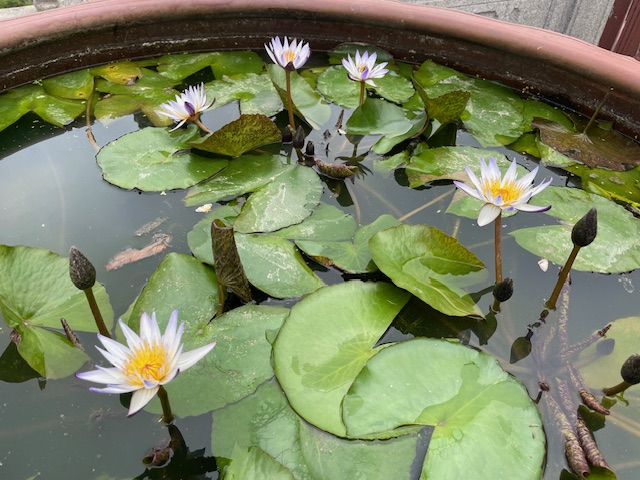


After visiting the Buddha statue, we had a traditional vegetarian lunch at the monastery’s refectory. It was a meal, in which each table shared eight or ten different dishes, and was delicious.
We then visited Ngong Ping Village, a culturally themed venue designed to reflect the historical and spiritual influences of the area.
From there we boarded a cable car for a 23-minute ride over the South China Sea from which we could see Hong Kong International Airport, Landau Island’s mountainous terrain, and the Tian Tau Buddha statue, as well as many very large housing projects for the large number of Hong Kong citizens in this relatively small area. Most of the housing is government subsidized housing apartments (400-600 square feet in total area). Residents commute to Hong Kong Island and Kowloon on a modern subway system.
We left Hong Kong that evening, and again experienced the beautiful lights of this great city.


 World Cruise - 2024