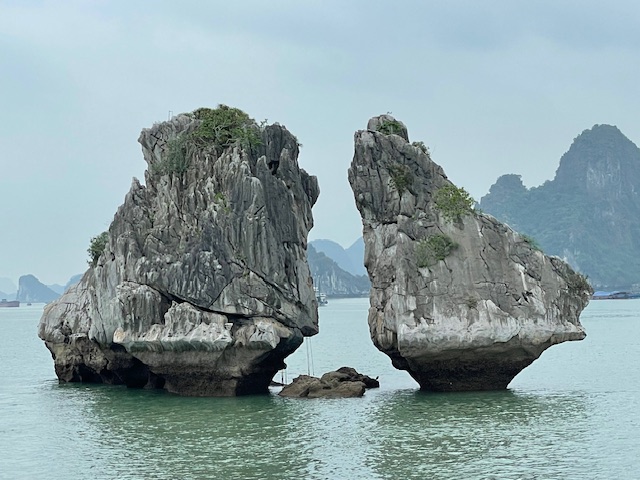
In the afternoon of Apr 17, 2024 we docked at Ha Long Bay, Vietnam. Ha Long Bay is a UNESCO World Heritage Site and a popular travel destination in Quang Ninh, Vietnam. It is famous for its thousands of limestone islands and islets that create a spectacular landscape.
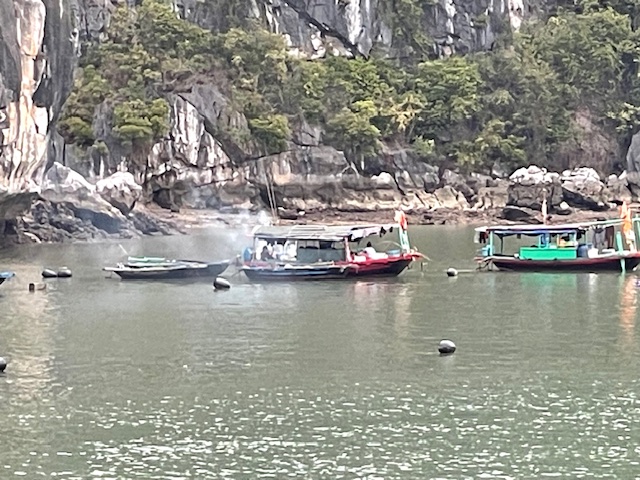
We left the ship that afternoon on an overnight excursion to Hanoi, Vietnam. But first we took an excursion on a local boat to explore the bay and many of the limestone islands, a beautiful sight, even on the cloudy day that we were there.
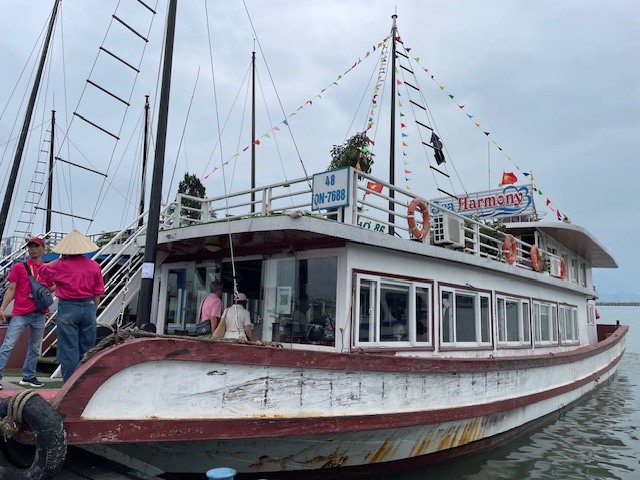

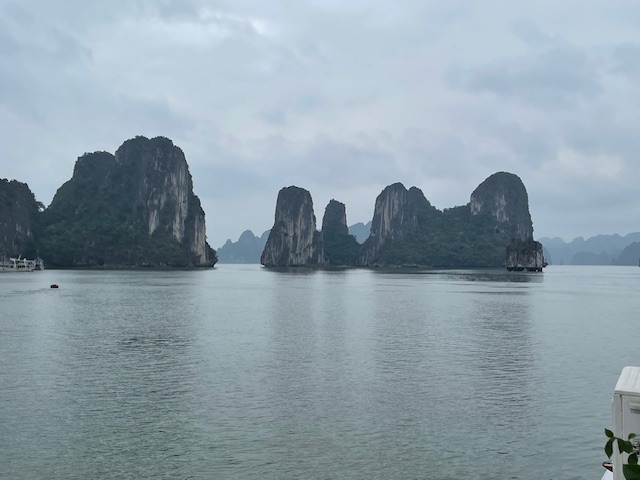
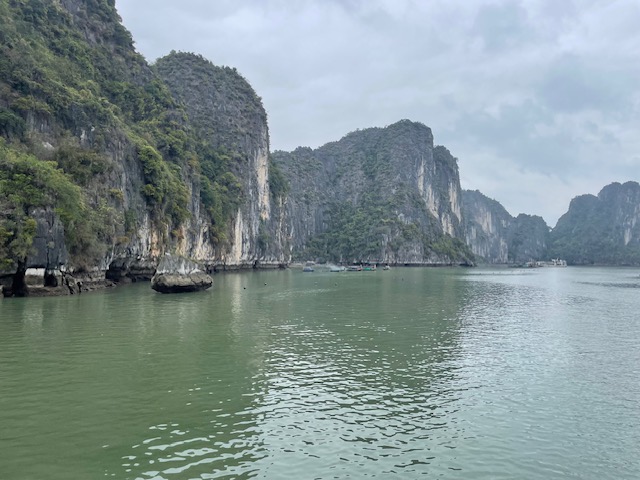


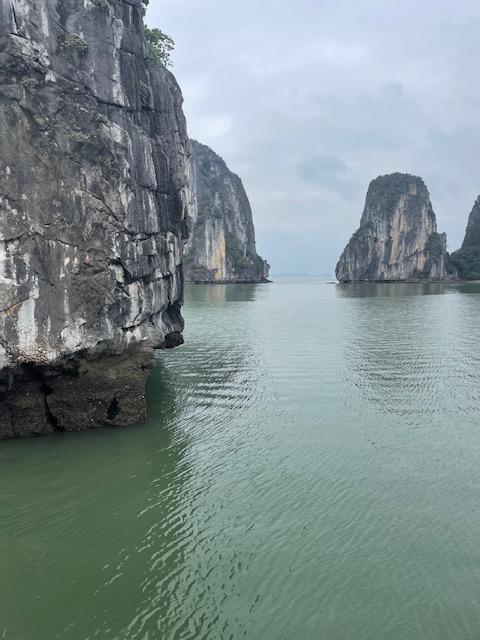

We then drove approximately 100 miles to Hanoi, where we checked into the Intercontinental Hotel for the night, had dinner, and rested for what we knew would be a long day on Apr 18.
Hanoi is the capital of Vietnam with a population of 8.5 million people, and 4 million motorcycles, so it was a very busy city. Hanoi has a very long history — first established in 1010, ruled by China for hundreds of years, and then colonized by the French following its victory over China in the Sino-French War (1884-85). It was ruled as part of French Indochina (together with Cambodia and Laos). The Chinese government entered northern Vietnam in August 1945, and Ho Chi Minh and leaders of the provisional government proclaimed Vietnam’s independence in September 1945.
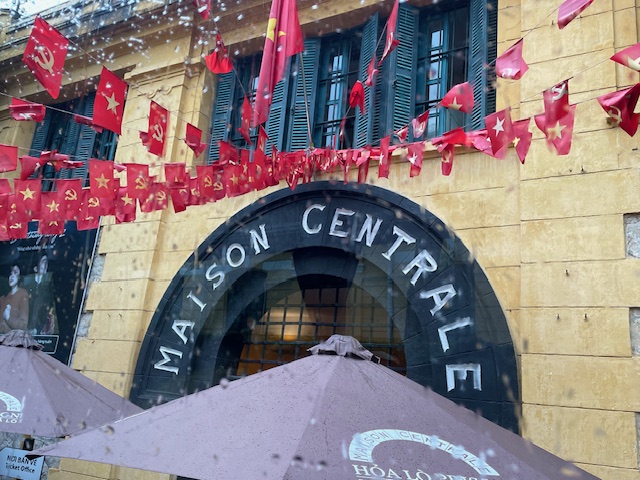
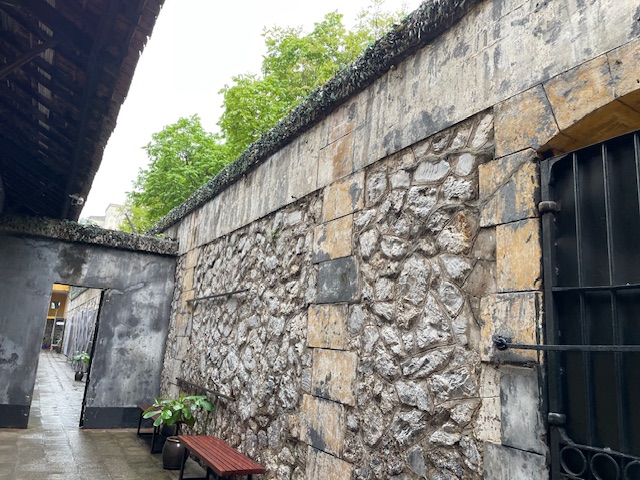
In the morning of Apr 18, 2024 we started our all-day excursion with a drive through the Old Quarter of Hanoi to the Hoa Lo Prison (know also as the “Maison Centrale” in the picture below or the “Hanoi Hilton”). This prison was established during the 19th century and incarcerated thousands of Vietnamese during their rule. The prison was also the home of many U.S. prisoners of war during the American Vietnam War.

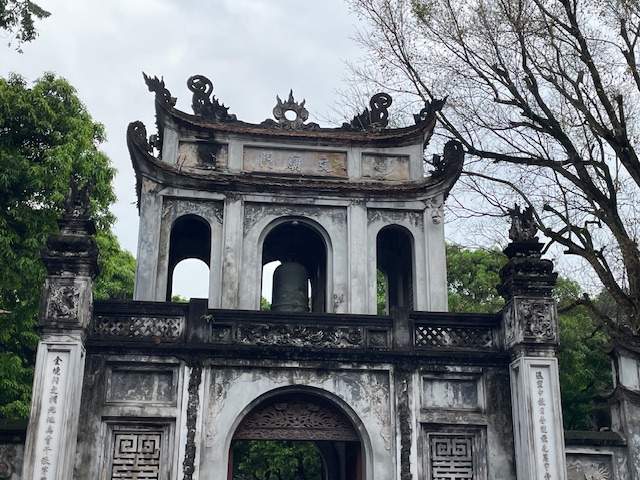

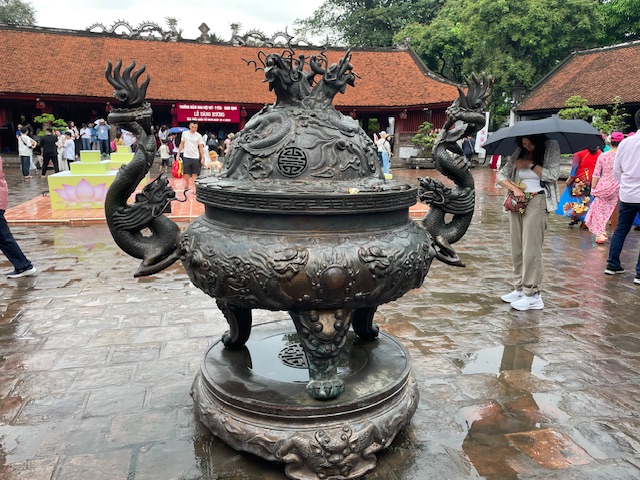
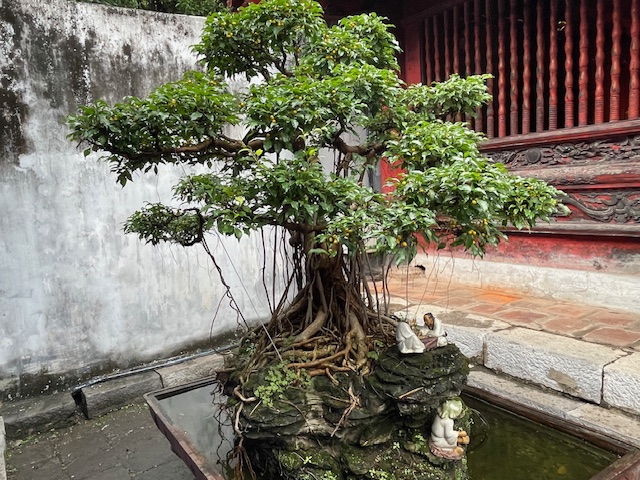
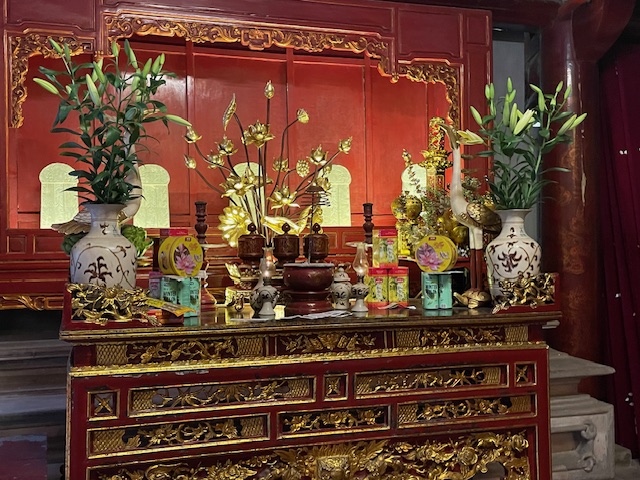
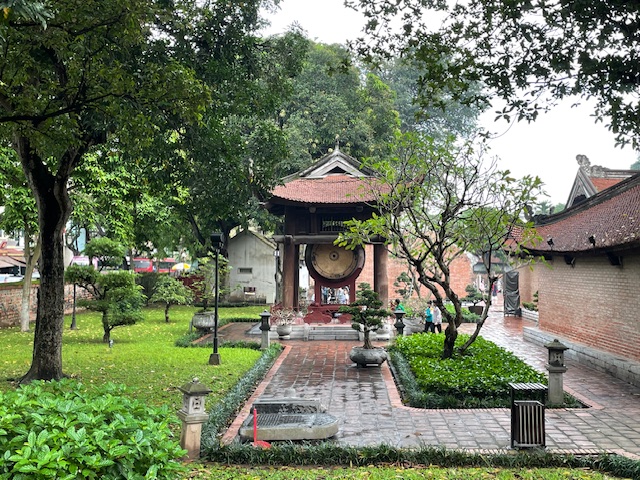
We then went to the Temple of Literature, a temple which is dedicated to Confucianism, and has landscaped courtyards, numerous altars and shrines, and an impressive front gate. It is also the site of the first university in Vietnam that was established in 1076 as the Imperial Academy to educate Vietnam’s bureaucrats, nobles, royalty and other members of the elite. It remained opened until 1779, when the country’s capital was transferred to Hue by the king.
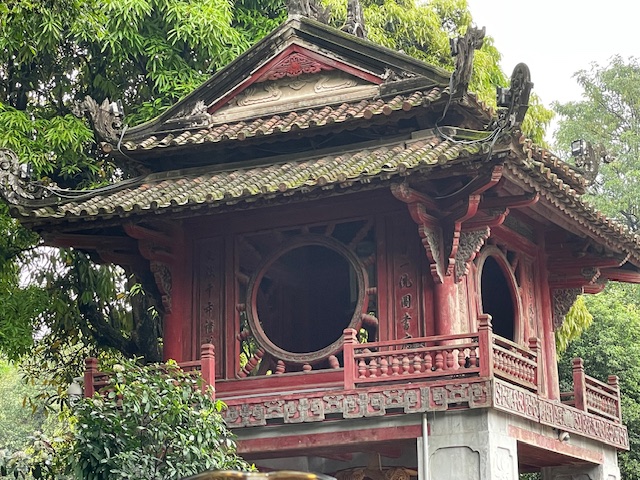


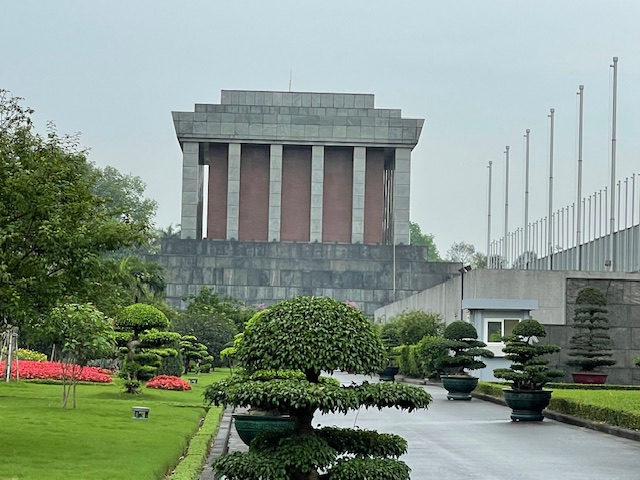
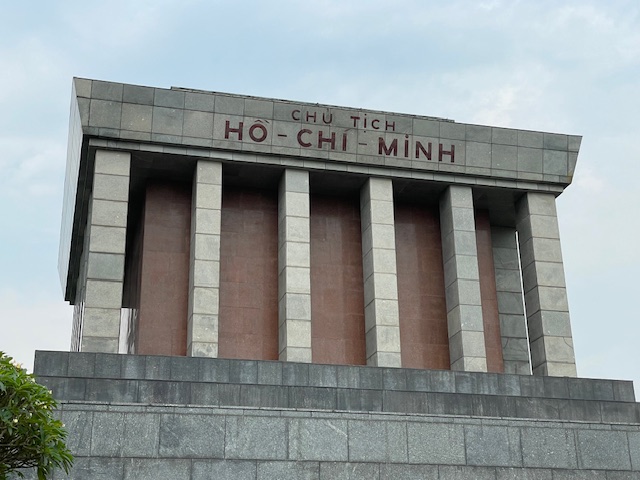
Our next destination was Hanoi’s imposing Ba Dinh Square which is dominated by the impressive marble and granite tomb and mausoleum of the country’s first president, Ho Chi Minh, as well his stilt house and a pillar pagoda.


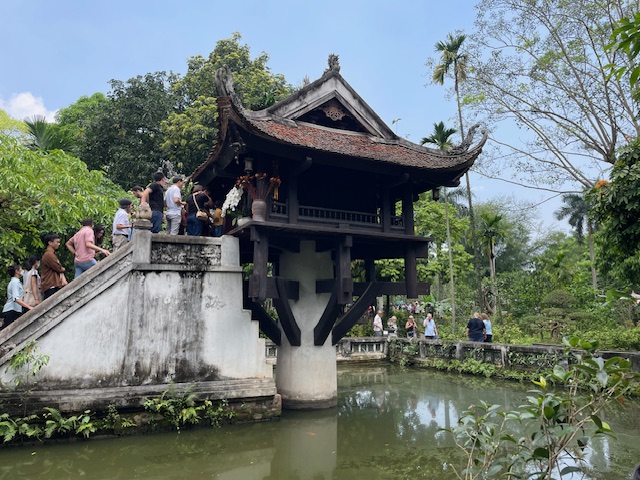


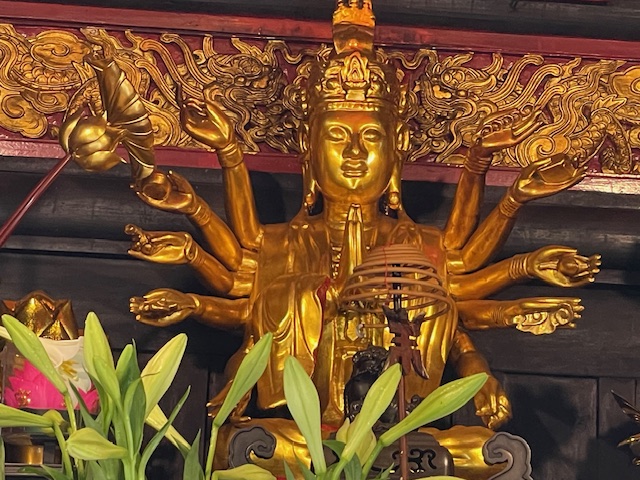
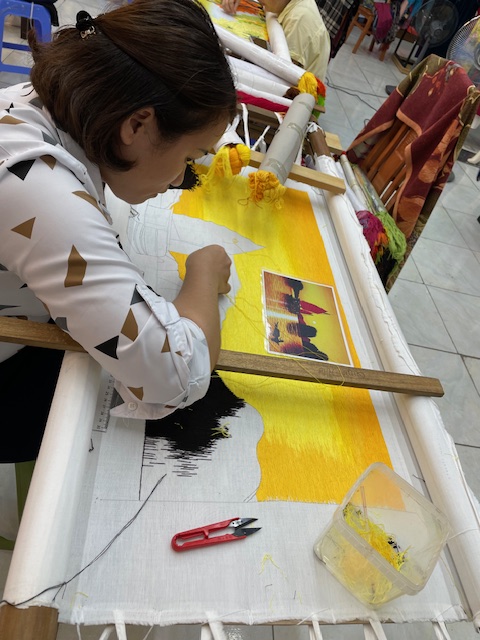
We then left this area and headed off to a fine Viernamese lunch, before going to a store that featured local crafts people working on embroidery art, and many nice Vietnamese items of silk and jade. Chuck passed on ordering a silk suit, but Nancy found a nice jade bracelet.


From there we went to the Water Puppet Theater to enjoy a water puppet show accompanied by live folk music. It was great entertainment and a popular Vietnamese attraction.

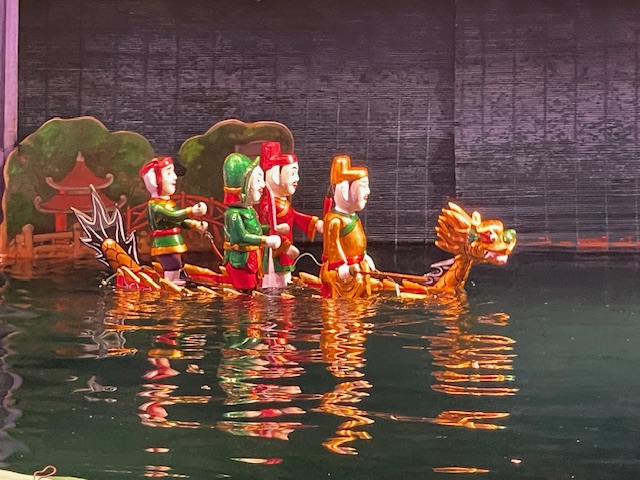


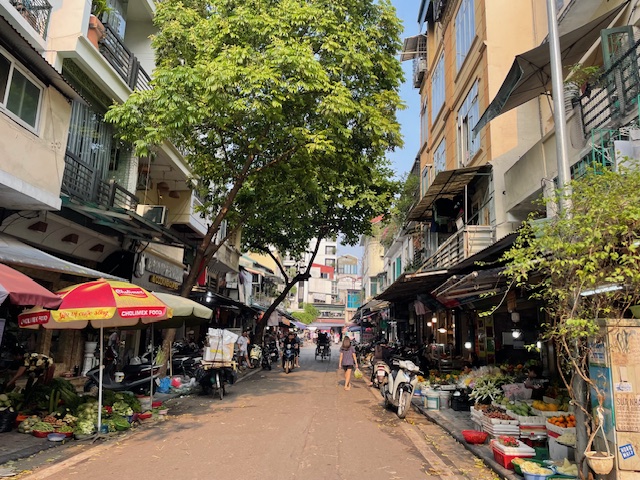
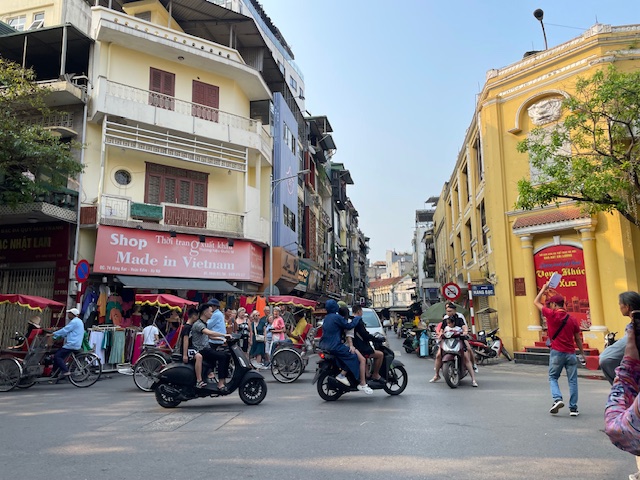
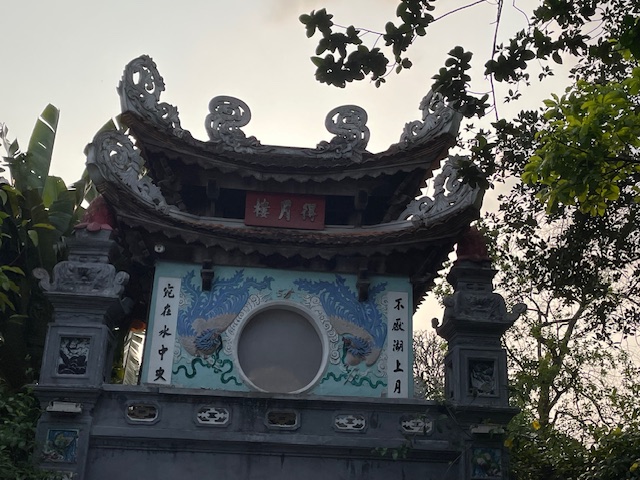
After the water puppet show we had time to walk through old Hanoi and then visit another temple, the Ngoc Son Temple in the middle of Hoan Kiem Lake, before having dinner and leaving Hanoi to return to the ship. As we drove out of town, we passed the Hanoi Opera House (last picture below) which was built by the French during their occupation, and is modeled after the Paris Opera House. It was a reminder of the heavy French influence, especially in its architecture, all over Hanoi.




 World Cruise - 2024