On Apr 25, 2024, we docked at Sihanoukville, Cambodia, which is located on a peninsula in the country’s southwest on the Gulf of Thailand. This coastal city of approximately 90,000 people has grown in parallel with the Sihanoukville Autonomous Port, which began in June 1955. It is the country’s gateway to direct and unrestricted international sea trade.
We started our day with an excursion to Phnom Penh, the nation’s capital and most populous city, with a population of approximately 2.8 million people. After a long bus ride to Phnom Penh, we had a nice Cambodian lunch before beginning our tour of the capital.
Our first stop was at Wat Phnom, a centuries old temple complex on a hilltop. The complex featured Buddhist shrines, a stupa (a dirt burial mound faced with stone) and gardens.
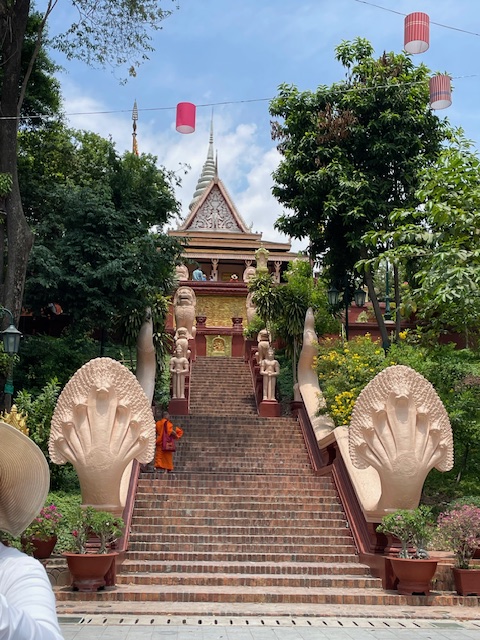
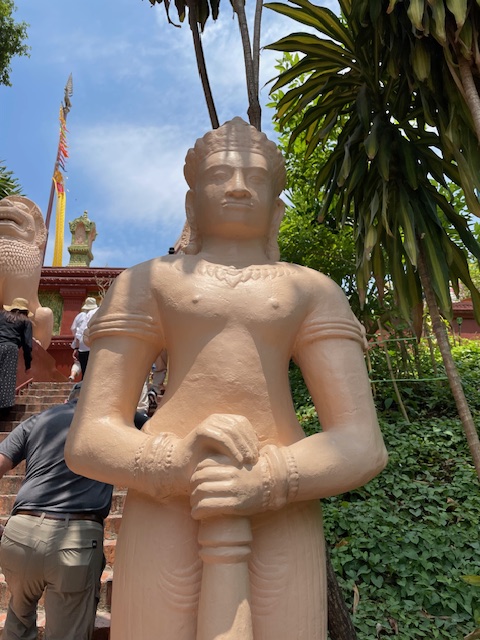
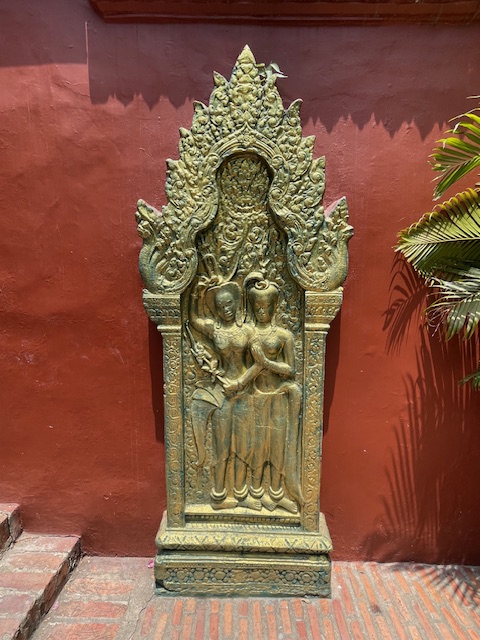
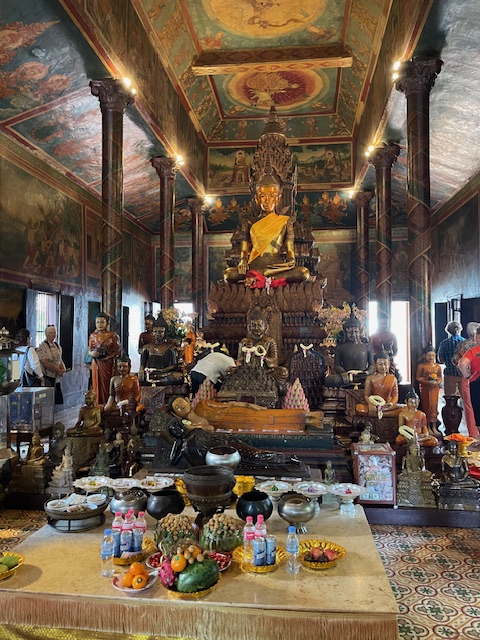
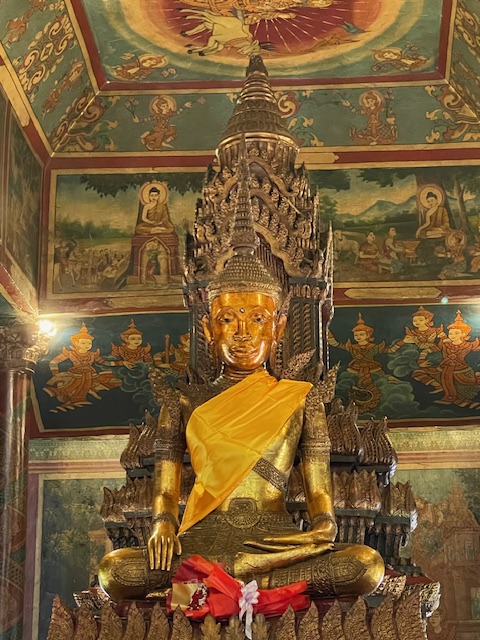
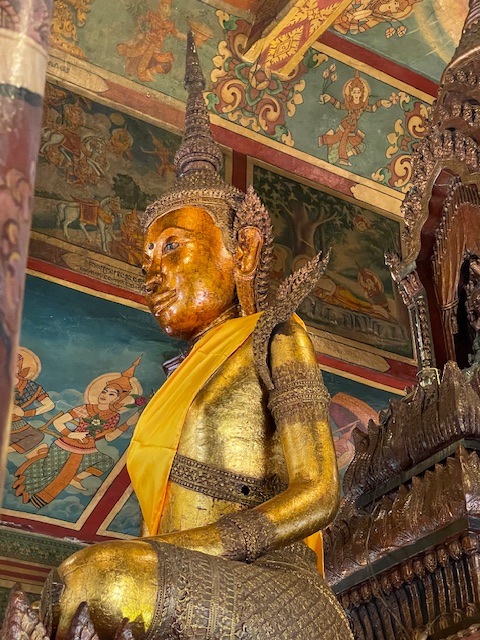
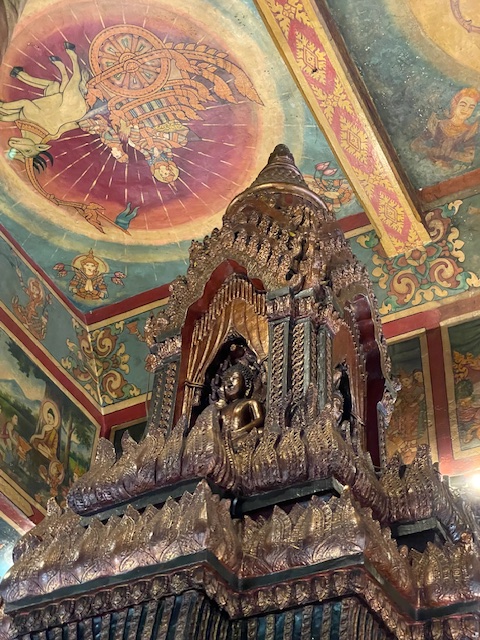
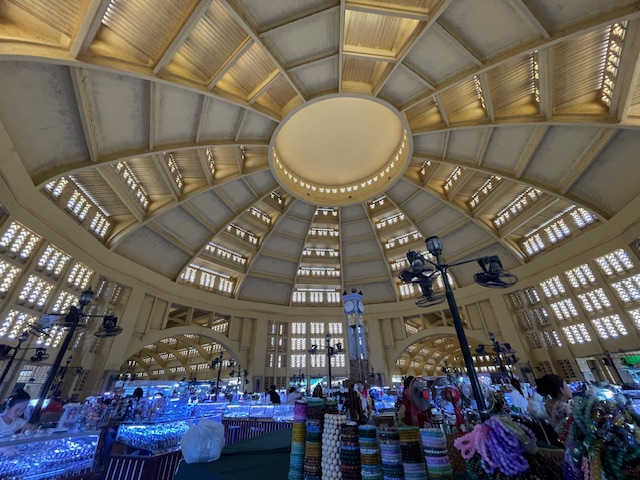
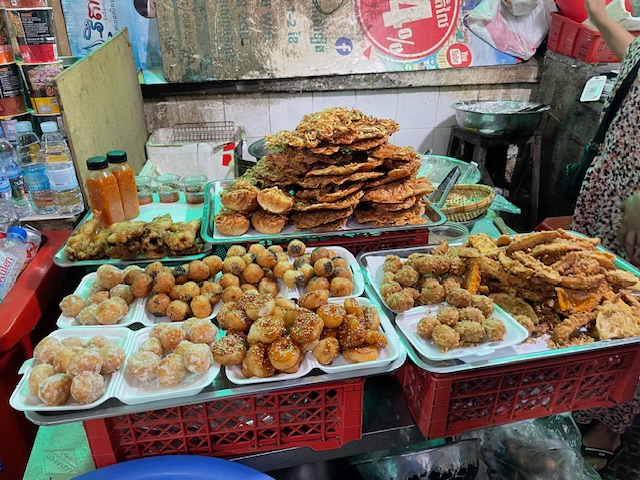
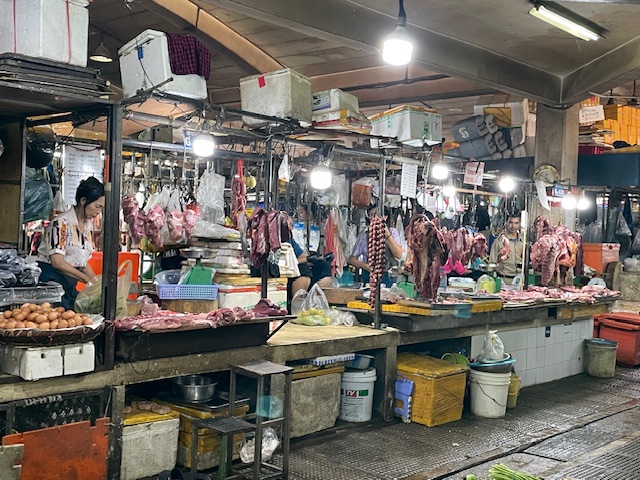
After viewing this complex, we stopped at the Mercado Central in the city that is a gigantic market selling food, clothing and many other local items.

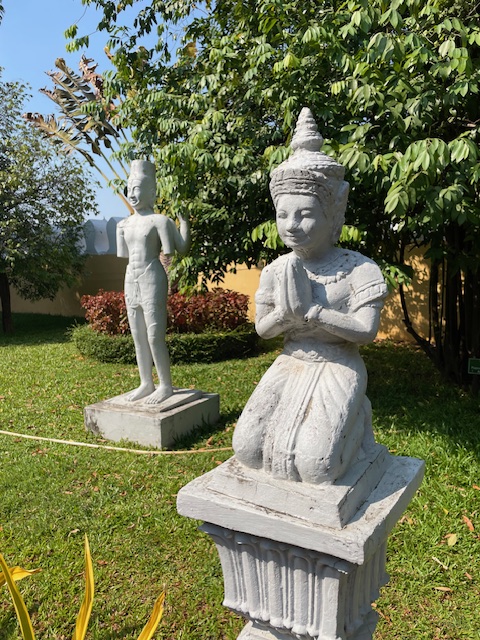
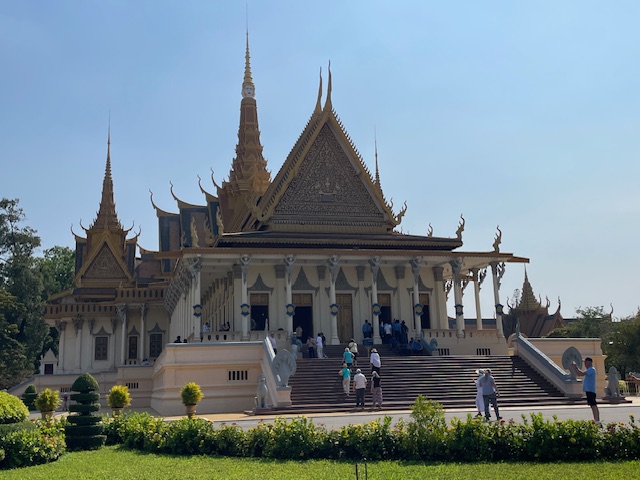
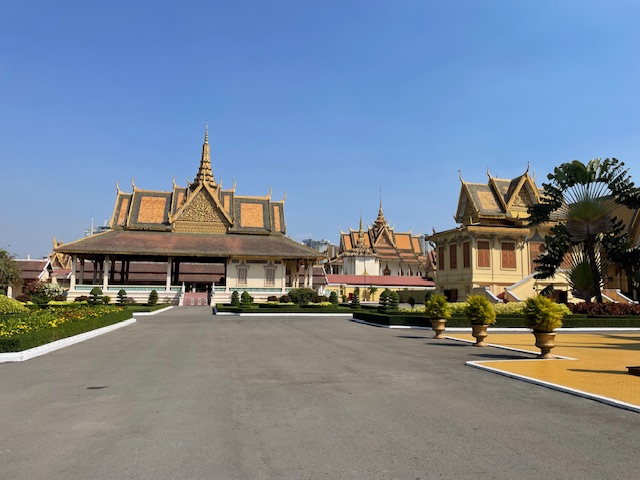
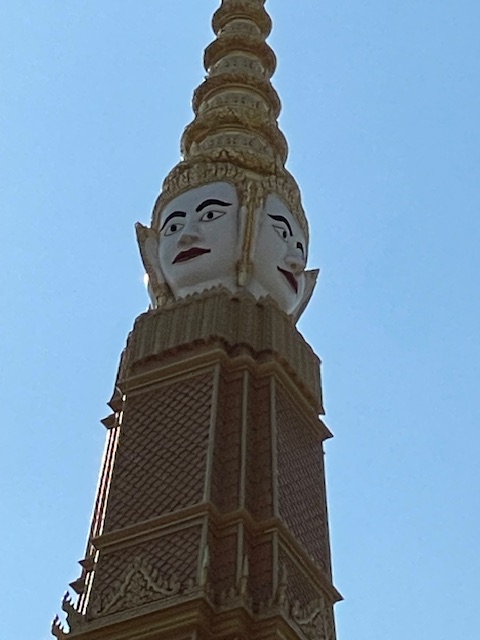
Our next stop was the Royal Palace, the official residence of the King of Cambodia and the Royal Family since the 1860s, which sits right in the center of the city surrounded by a high wall. The iconic Royal Palace features pavilions adorned and painted with yellow and white colors. The yellow represents Buddhism and the white represents Brahmanism. The Silver Pagoda was built in 1902 and renovated in 1962 in the style of the traditional Khmer architecture. It has a floor that is covered with 5,329 silver tiles that weigh over 5 tons. Inside is a series of lavish Buddha statues made of precious metals.



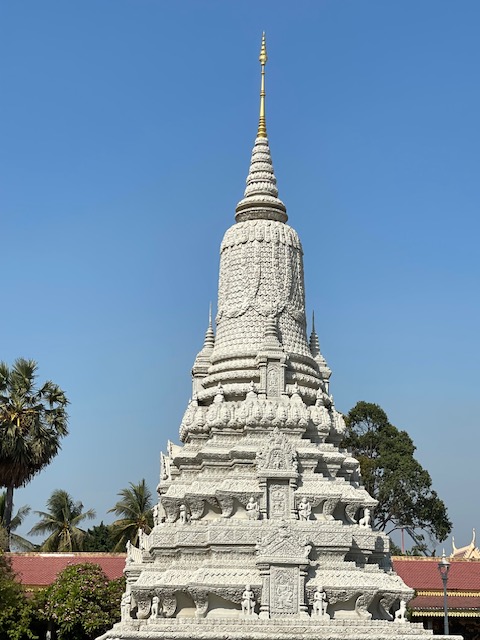
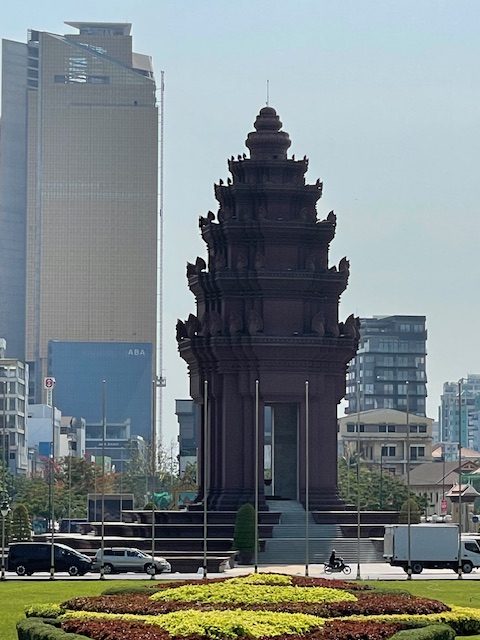
We then visited the Independence Monument built in 1958 to memorialize Cambodia’s independence from France, and saw the Norodom Sihanouk Memorial, a monument commemorating the former King Norodom Sihanouk who died in 2012 and is survived by his son, the current King Norodom Sihamoni.

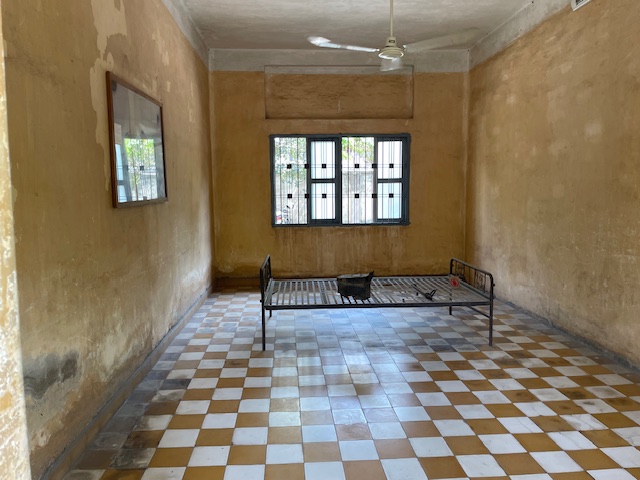
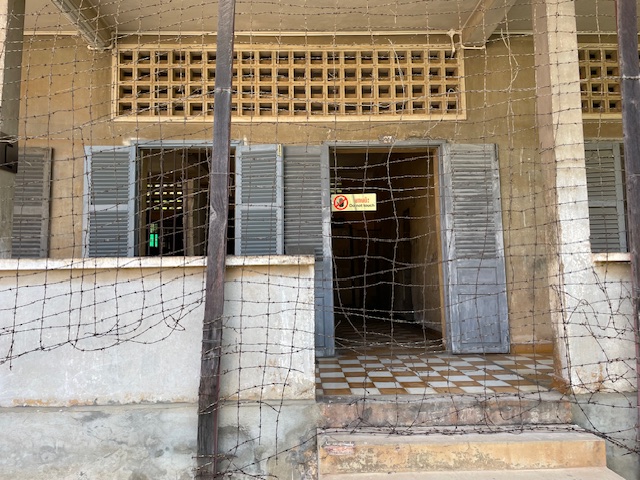
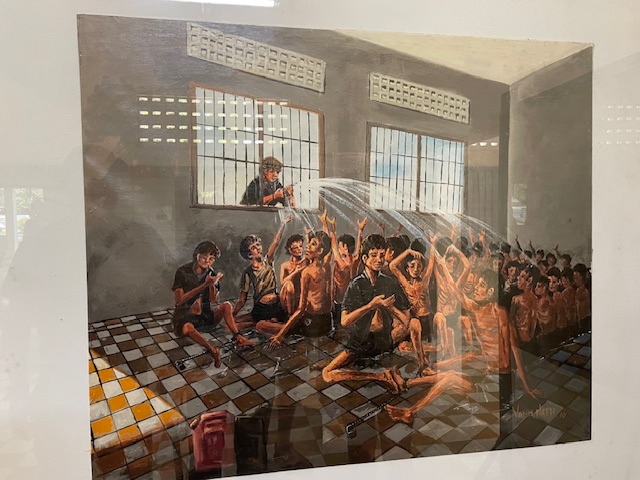
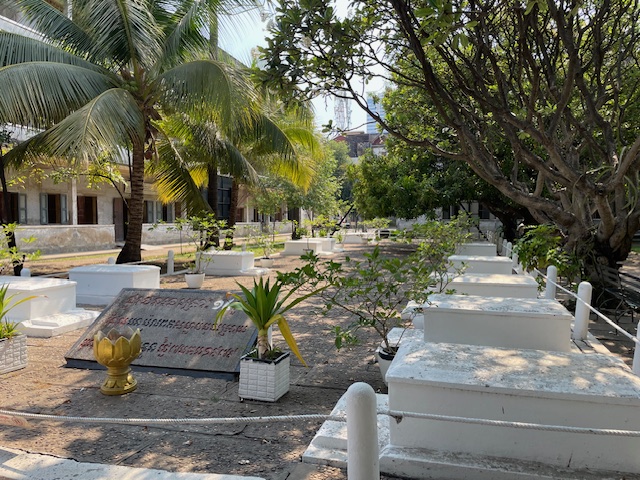
Our last stop was at the Tuol Sleng Museum, formerly a high school. The five buildings of the complex were converted in 1975 (after the Khmer Rouge won the civil war) into a prison and interrogation center, and the classrooms were converted into tiny prison cells and torture centers. Between 1975 and 1979, an estimated 17,000 people were imprisoned at Tuol Sleng. They usually were former Khmer Rouge members and soldiers accused of betraying the party. Many were tortured and killed. In 1979 the Vietnamese army uncovered the grissly site and it was opened as a museum memorializing the brutal actions of the Khmer Rouge.



 World Cruise - 2024