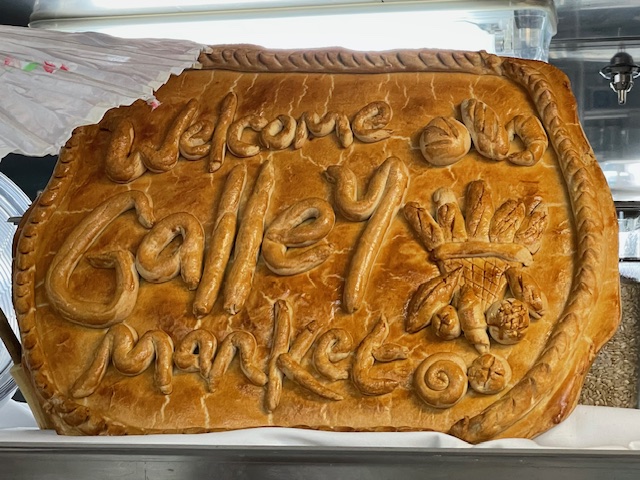
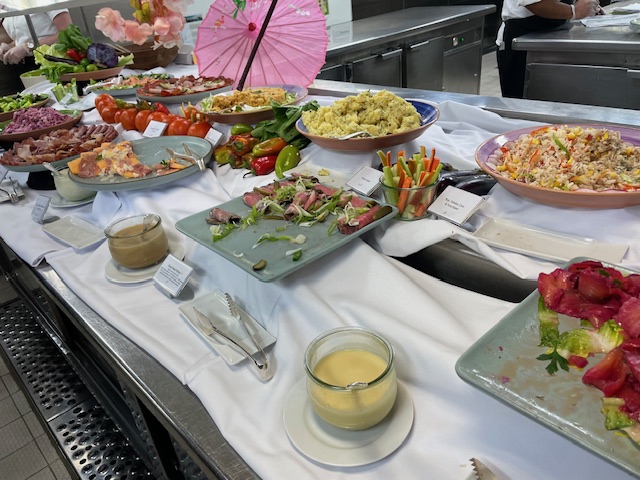
On Mar 20, 2024 we had another sea day as we traversed the South China Sea approximately 660 miles from Manila to Kaohsiung, Taiwan. The sea today is a bit choppy which may make it challenging to enjoy the Galley Market Lunch, a Seabourn signature event in which we are able to take our plate around the galley and enjoy all the wonderful offerings prepared by the culinary team.
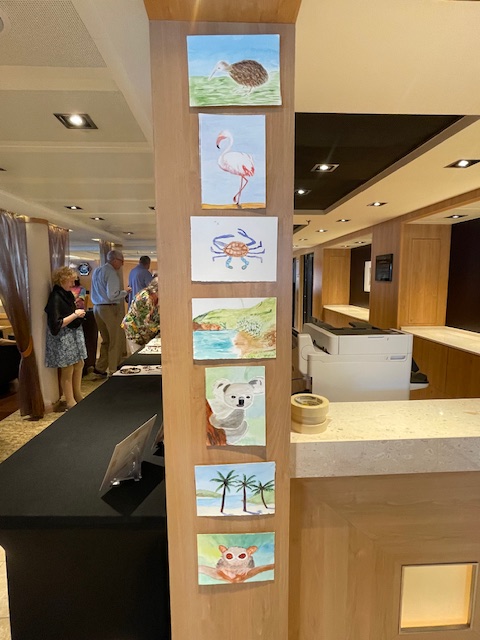
Later in the afternoon it was time for the Art Show, in which the art instructor displayed many of the works done by the passengers on the ship, including Nancy.
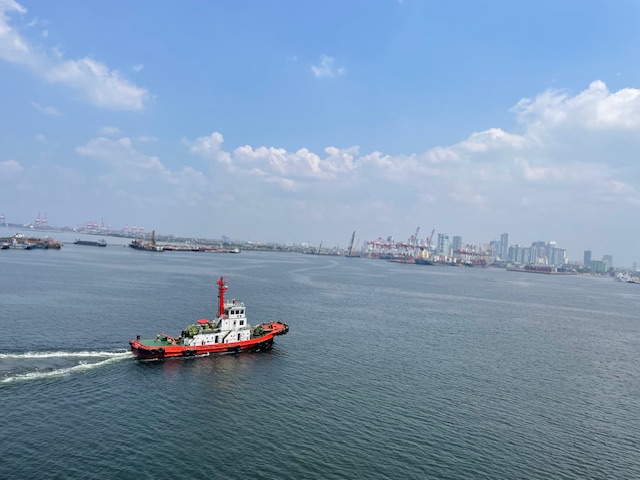
On Mar 18, 2024 we sailed into Manila Bay and docked at Manila, Philippines. Manila is known as the “Pearl of the Orient” and is the capital of the Philippines. It is a densely populated (1.5 million people) bayside city on the island of Luzon. Manila, together with 16 contiguous cities and municipalities, is known as Metropolitan Manila (also called the National Capital Region). The population of Metropolitan Manila is nearly 15 million people.
The city of Manila was founded by the Spanish in 1565 and was held as a Spanish territory until 1898 when it was ceded to the U.S. after the Spanish-American War. It was held by the U.S. until 1941 when the Japanese invaded the country. During World War II much of the city was destroyed during the Battle of Manila in 1945, but the city was rebuilt after the war ended. The Philippines received its independence from the U.S. on July 4, 1946.
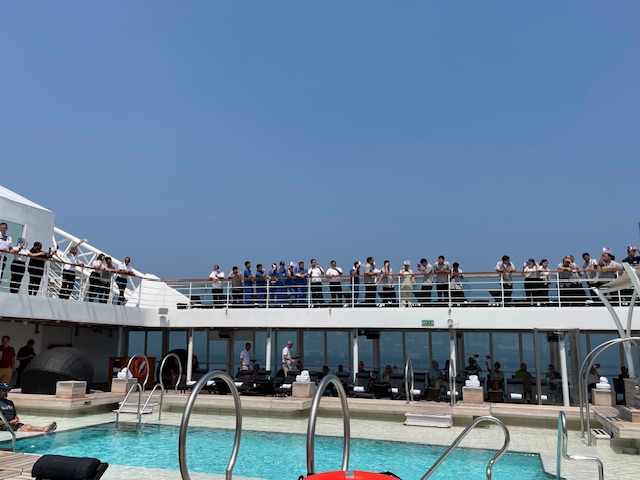
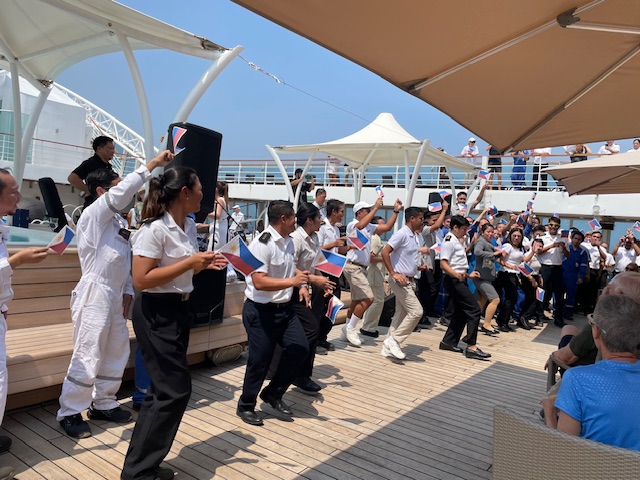
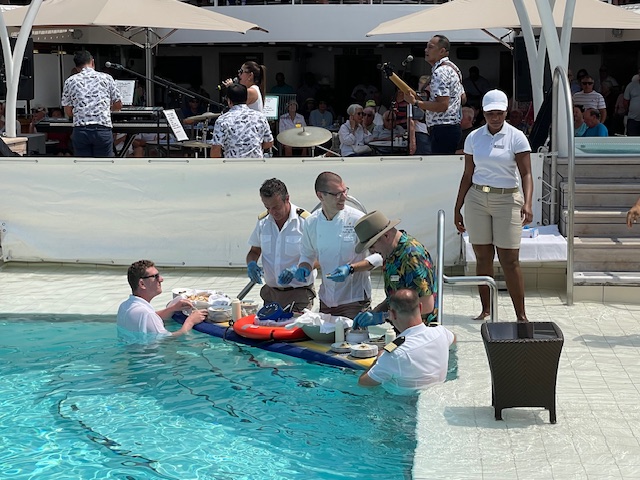
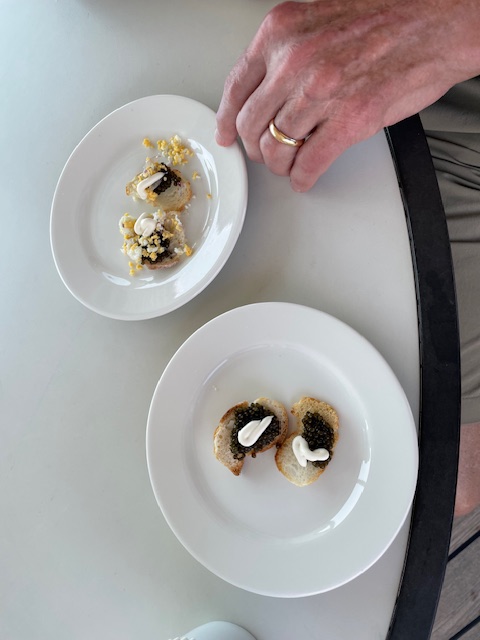
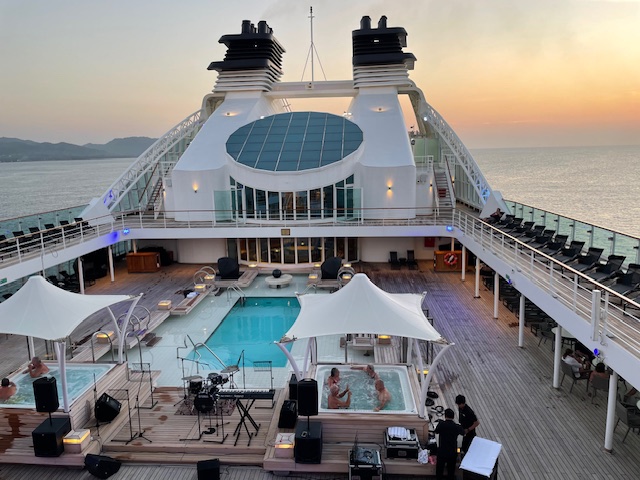
As we sailed into Manila Bay, the Seabourn Sojourn paid tribute to over 100 crew members who are Filipinos. All of the Filipinos lined the deck overlooking the pool as well as most of the open area on the pool deck. The band played, the guests drank wine and champagne, and had caviar by the pool, and all of the Filipinos danced and had a good time. It was a lot of fun and nice to recognize all of the hardworking crew.
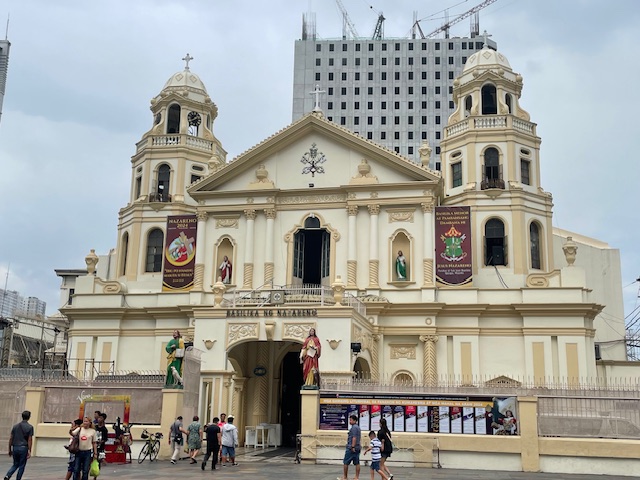
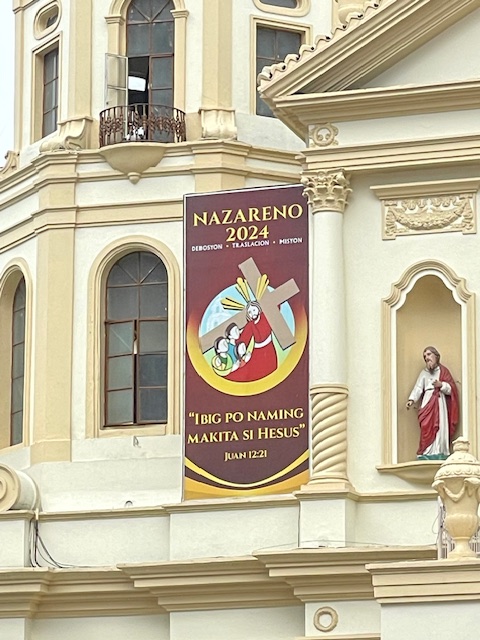
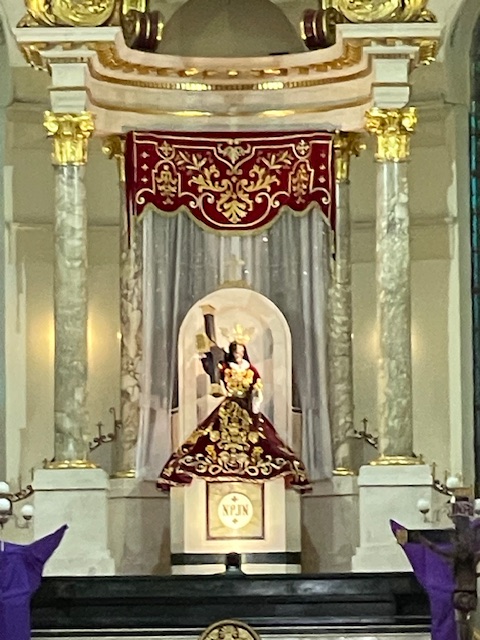
In the afternoon we took a walking tour through Manila during which we were able to see many interesting historical buildings, churches and monuments. Our first stop was the Quiapo Church, best known as the home of the Black Nazarene. This is a miraculous image of Jesus that was brought to the Philippines by the Spanish during the 1700s. The Black Nazarene has hundreds of thousands of devotees who head to the church every Friday for a novena.
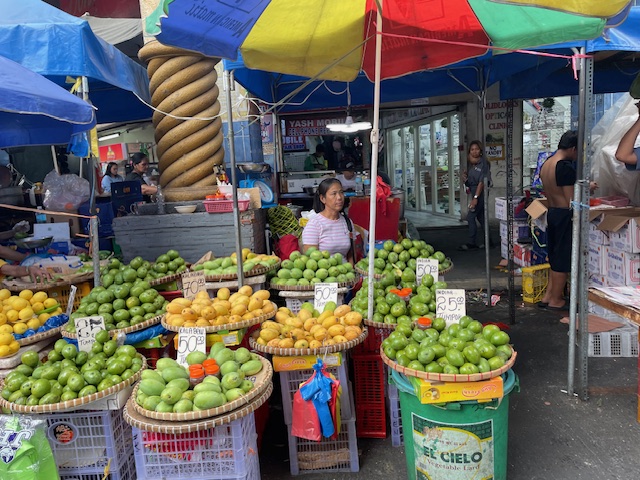
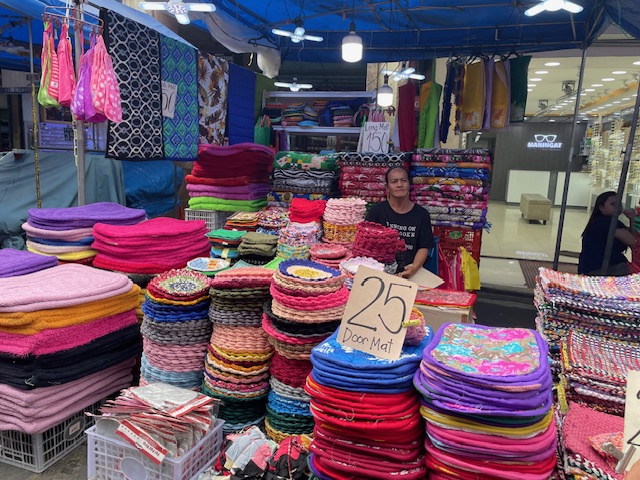
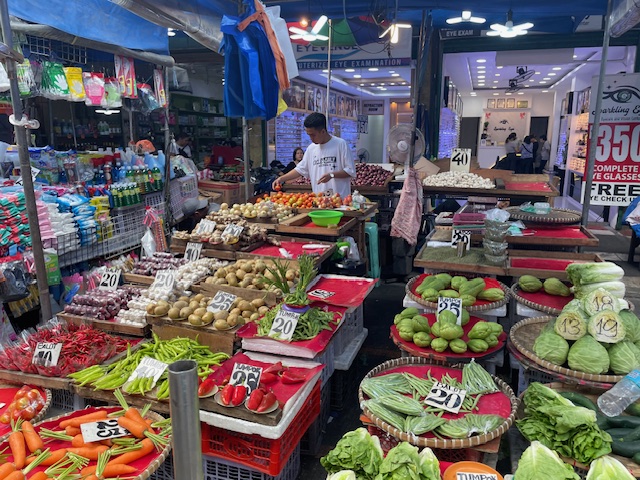
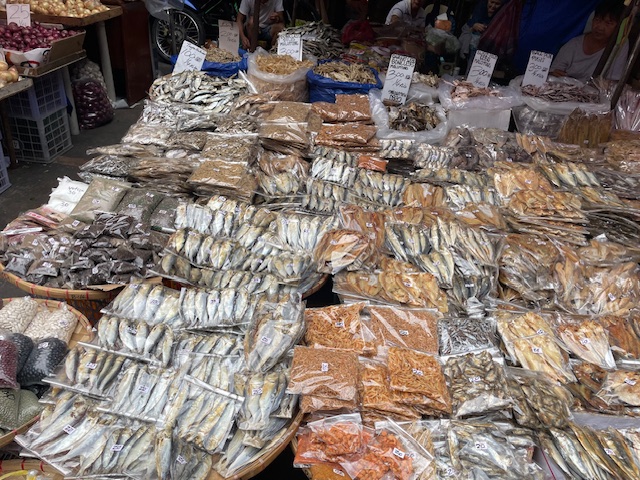
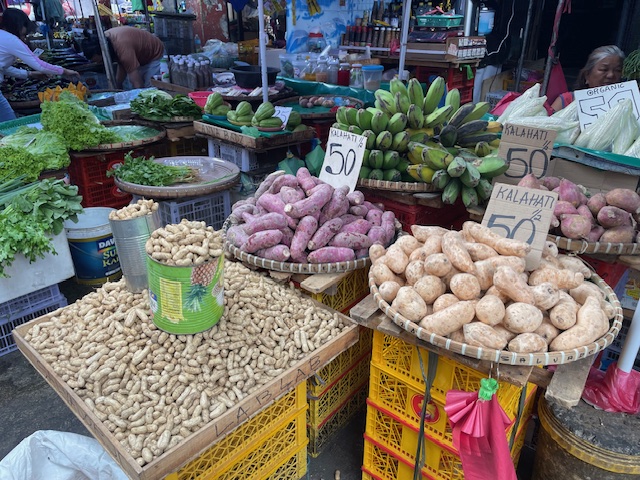
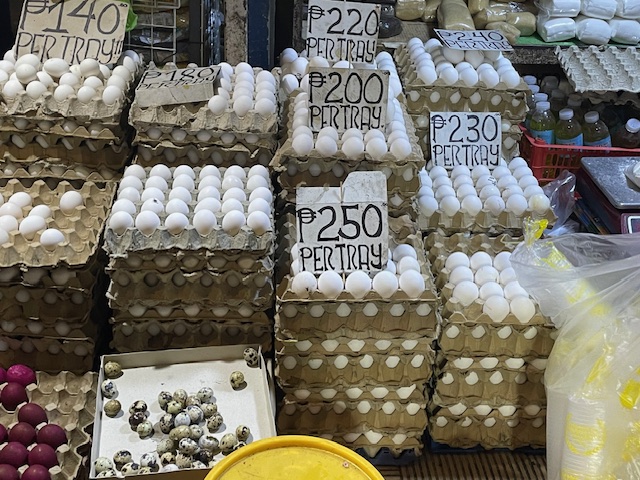
From there we walked down the very crowded streets to the Quiapo Market – a very lively outdoor market that sells everything from fruit, vegetables and fish to handicrafts and clothing.
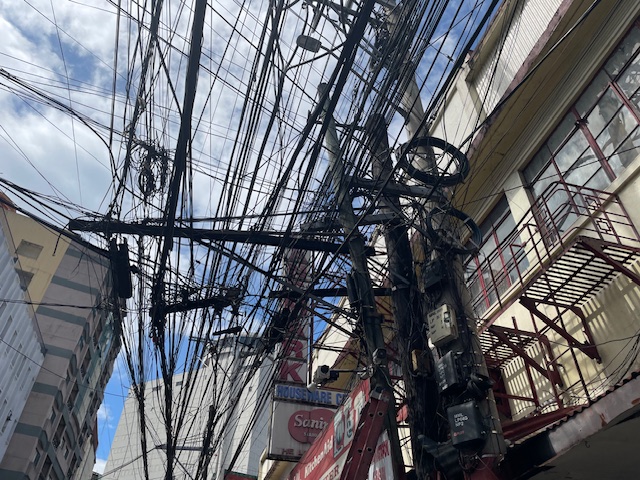
We continued walking through the streets and broken sidewalks past many local retail shops, restaurants, and quick food cafes or stalls. We were amazed by the myriad of electrical wires that hang everywhere.
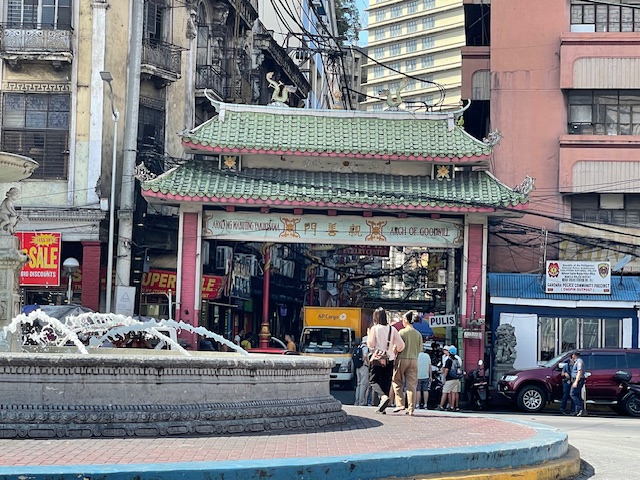
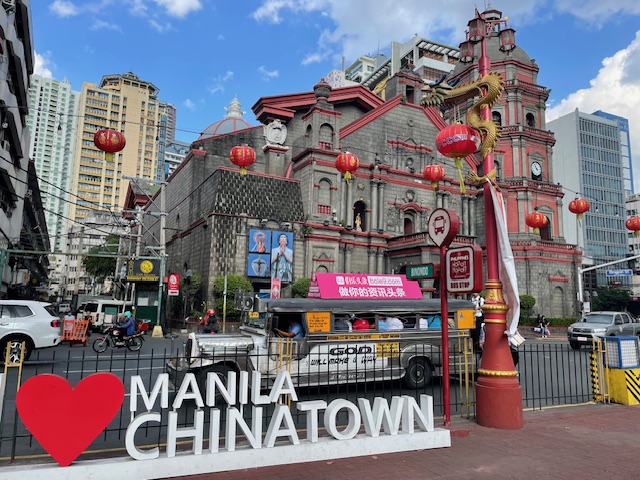
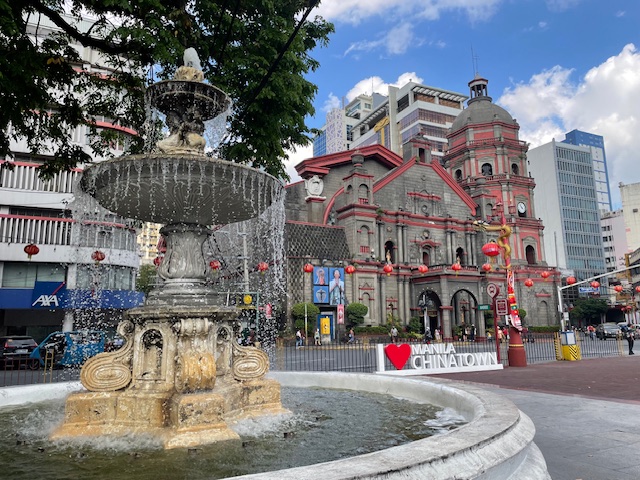
As we continued to walk we made our way to the Binondo, which is known as the world’s oldest Chinatown. It is also the largest Chinatown in the world outside of mainland China.
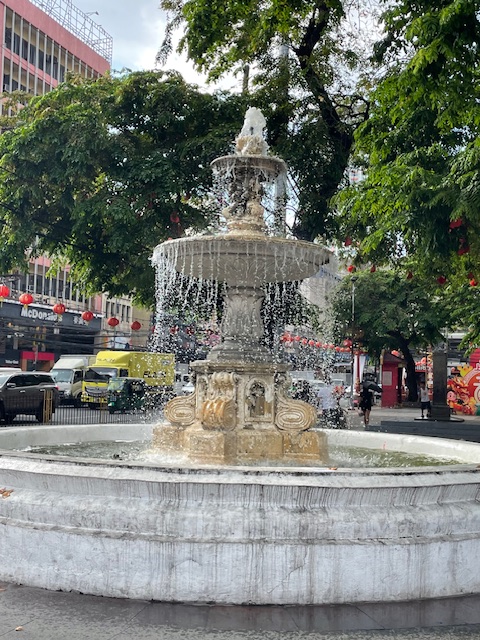
As we left the Binondo (Chinatown) we crossed the street and stopped in a plaza across from the Santa Cruz Baroque church which was built in the early 17th century. Also in the Santa Cruz Plaza is the beautiful Carnedo Fountain, named after Don Francisco Carnedo y Peredo, Manila’s greatest benefactor.
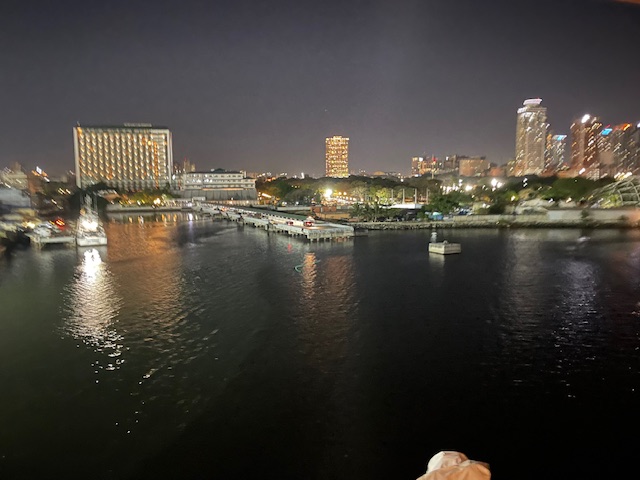
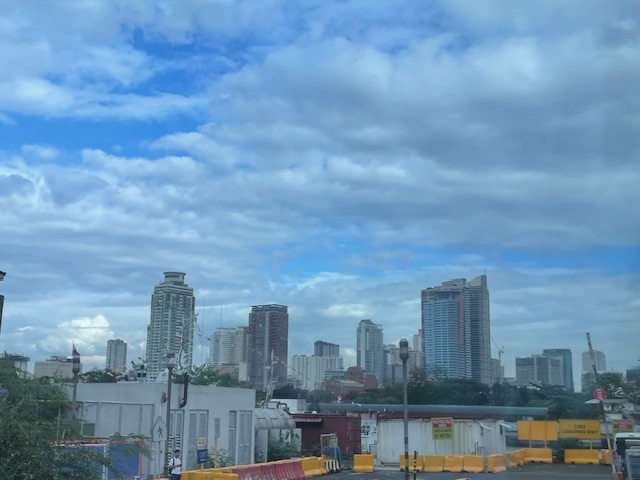
After that, we boarded a bus that took us back to the port and our ship, and in the evening we enjoyed seeing some of Manila lit up from the ship. The large building in the picture below is the Manila Hotel. It is a five-star hotel which was originally a lower rise building (the tower was a later addition). Prior to World War II it was used by General Douglas MacArthur as his home and office while serving in the Philippines.
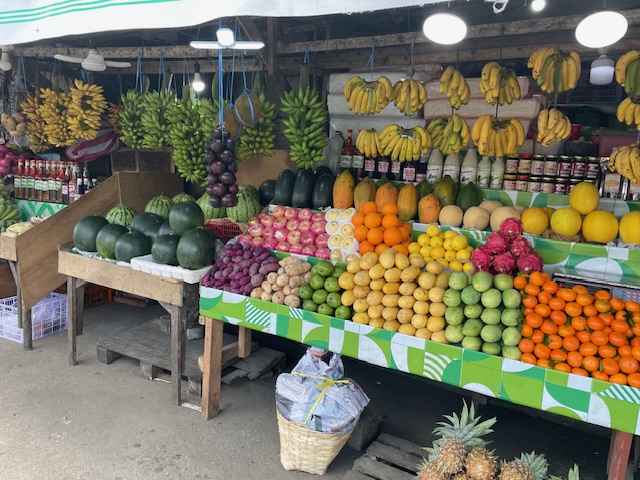
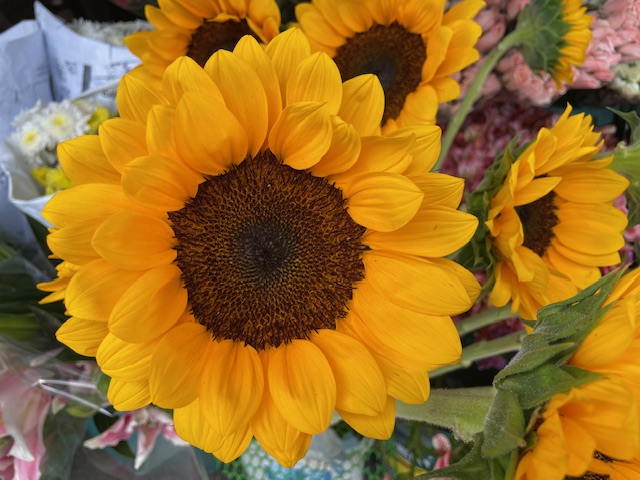
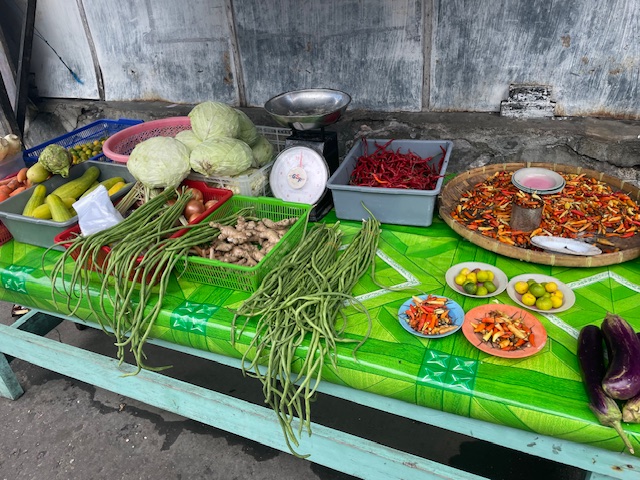
On Mar 19, 2024 we took an all-day excursion out of Manila to Tagaytay, which offered us the opportunity to see the transition out of the densely populated city of Manila to the outlying municipalities that comprise the Manila Metropolitan Region, where many factories and housing developments have been built. It is amazing how big the entire area is, and hard to imagine so many people existing in such close confines. Our tour then headed out into the countryside where we were able to see the greenery prevalent in the country and started to climb into an area of higher elevation. Along the way we stopped at some market stands that offered fruits and vegetables, as well as beautiful fresh flowers.
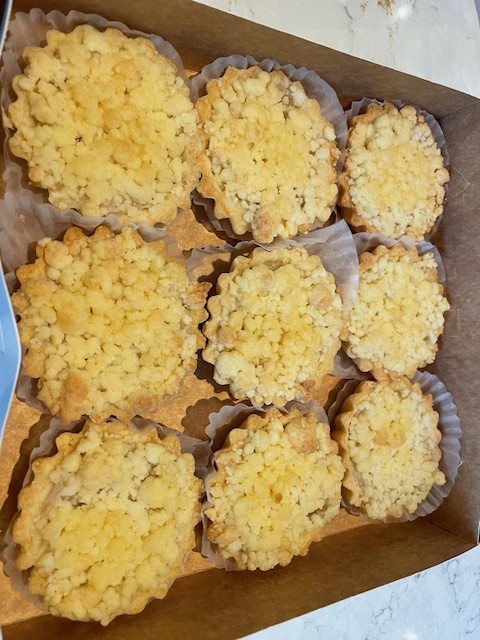
Across the street we stopped in a bakery that sold a local favorite, baku pie, which is a pie with young coconut filling.
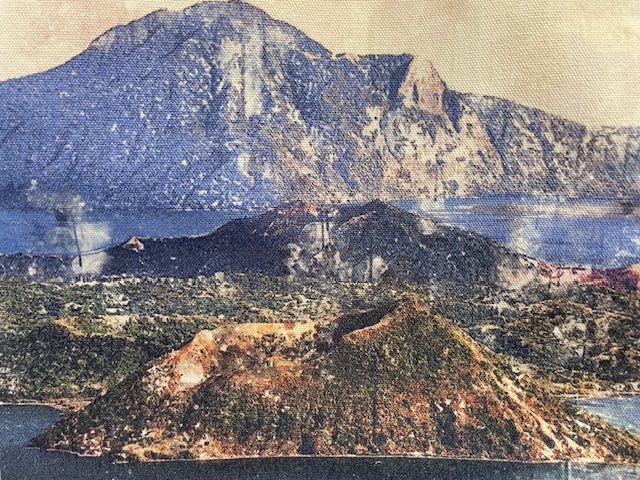
Eventually we arrived at Tagaytay where we saw Taal Volcano, a live volcano situated within Taal Lake. Taal Volcano is the world’s smallest active volcano; it last erupted on Mar 26, 2022. It was hazy while we were there so the pictures of the volcano were not real clear; we supplemented them with a picture of what the volcano looks like on a clear day.
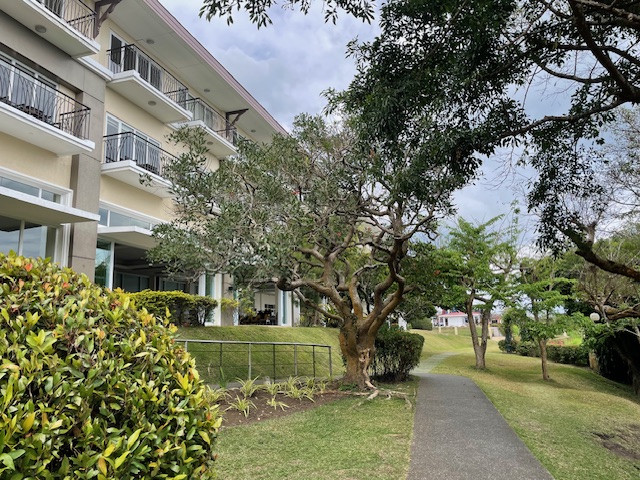
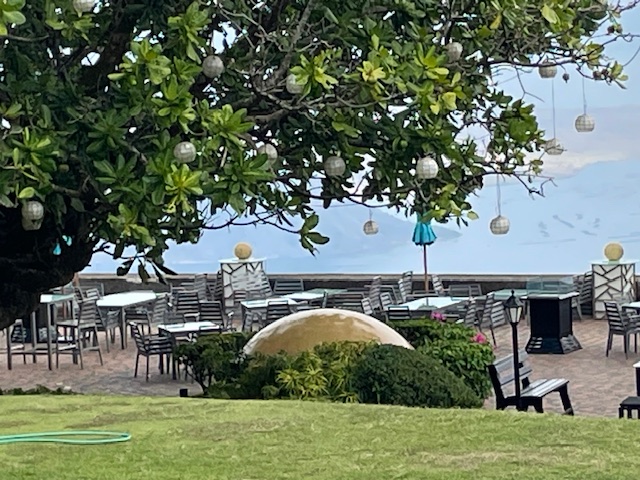
We had lunch at a restaurant/resort overlooking the volcano and enjoyed the time there.
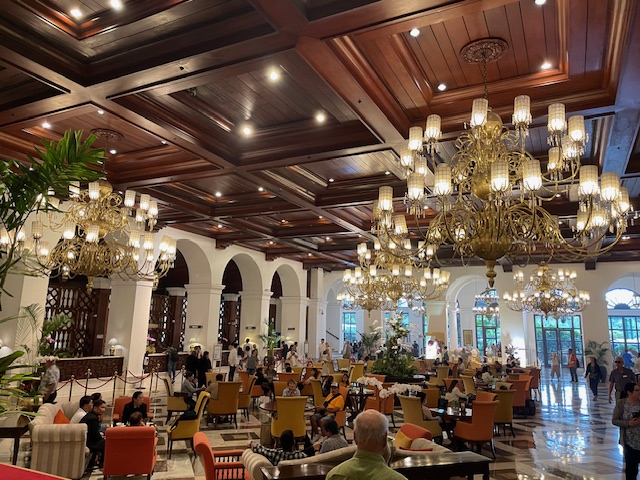
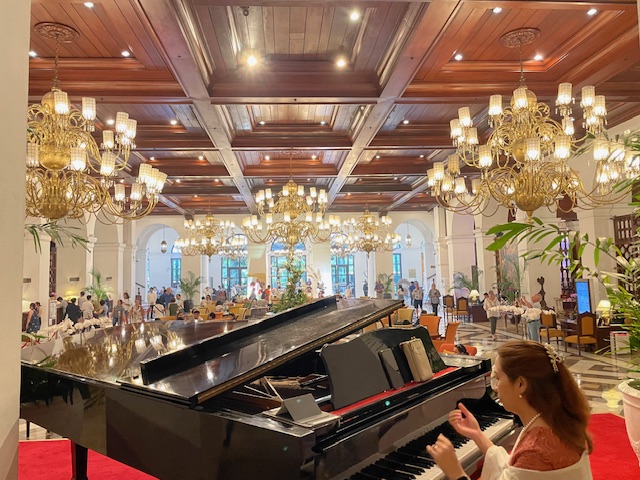
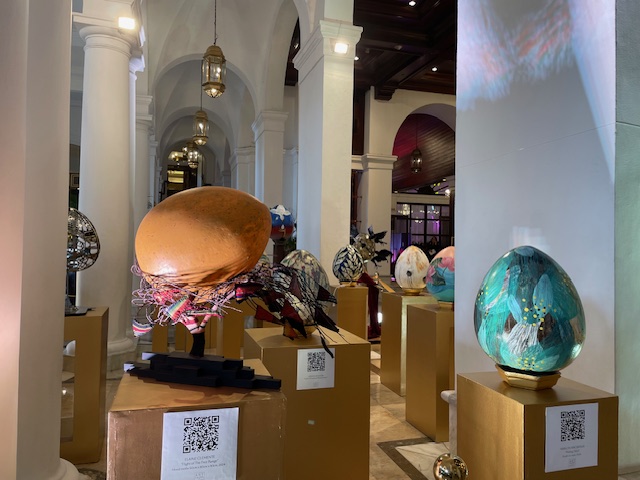
On our way back to the port, we made a stop at the Manila Hotel to see the lobby of this magnificent place.
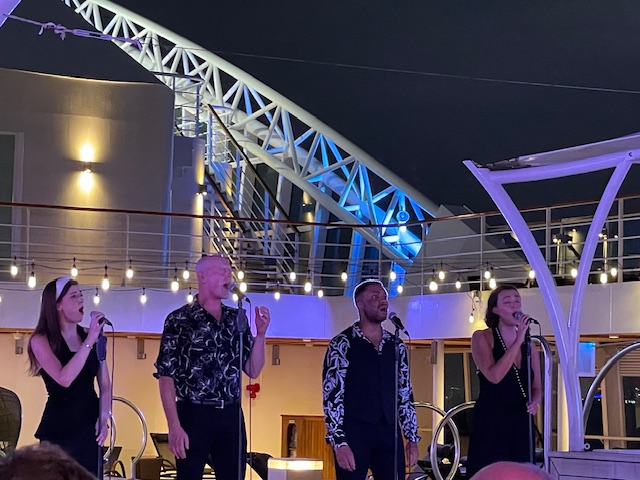
That night we saw some of the Manila skyline on our sail-away from this beautiful city, while listening to the Seabourn Singers.
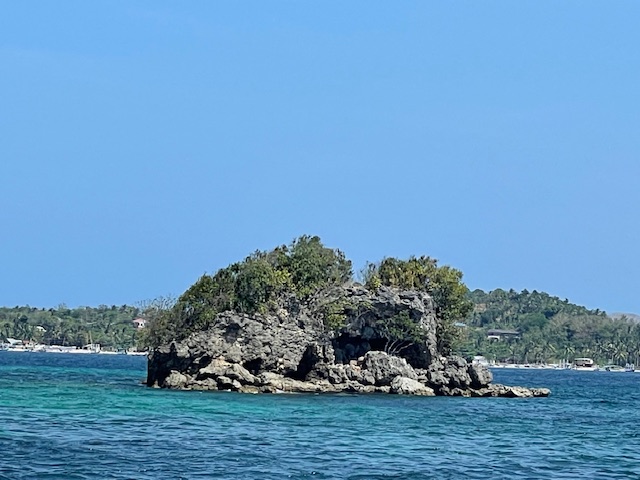
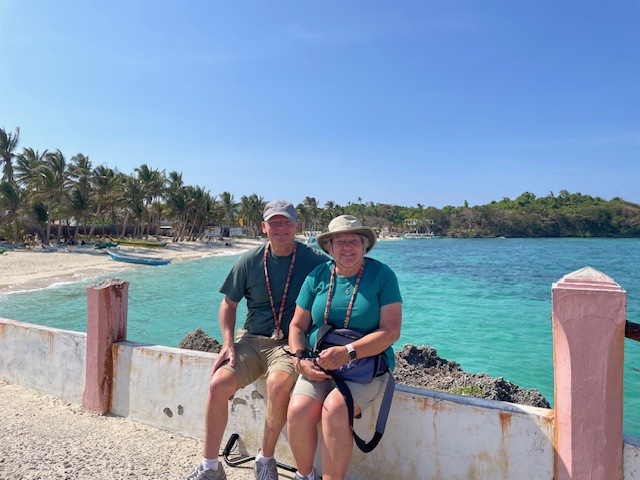
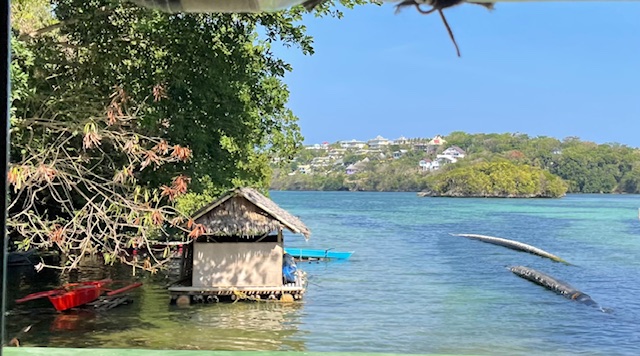
On Mar 17, 2024 we anchored at Boracay, Philippines, an island located in the West Visayas Region. It is one of the islands of the province of Aklan, in the center of the Philippines. The island is a small island (only about 7 km. long and 1 km. wide) but is home to over 300 resorts and hotels, ranging from budget to upscale. It is known for its fine beaches and coral reefs, which attract many different marine life.
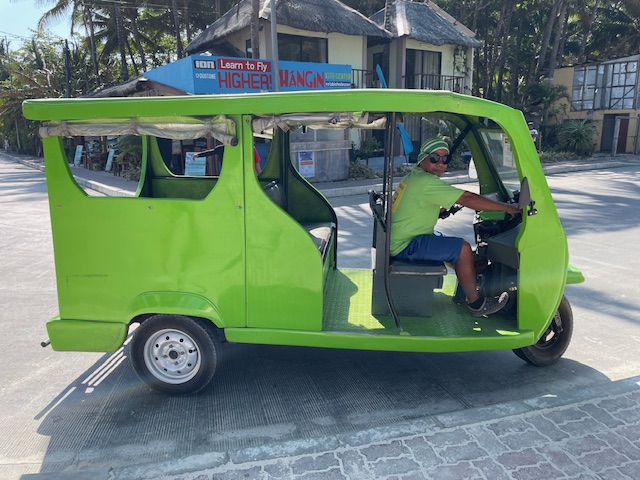
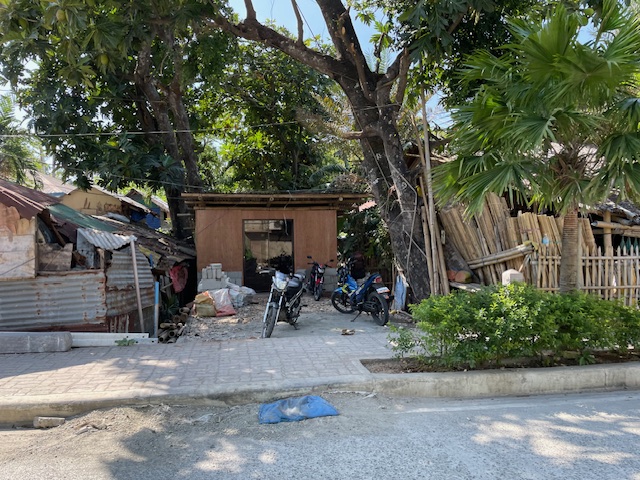
We decided to try to explore this small island on our own. On our way out of the port we were greeted by some musicians and dancers that demonstrated the friendly atmosphere of the island. It was very hot, so we hired a tuk-tuk driver to take us around the island and stop at some of the beaches.
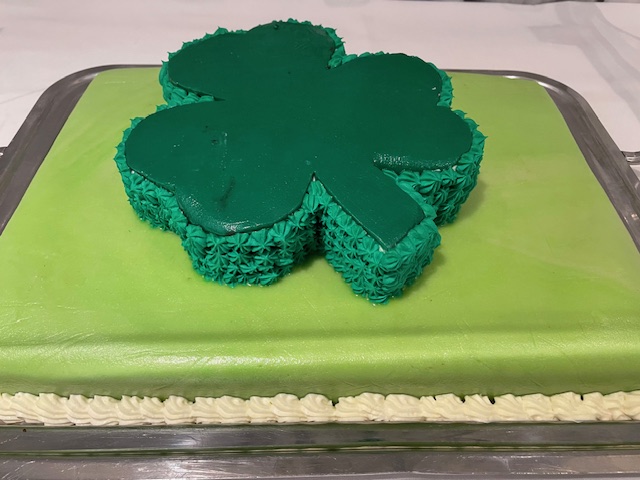
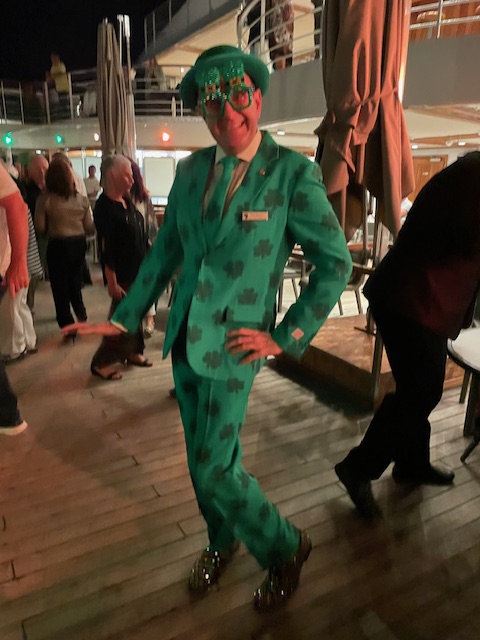
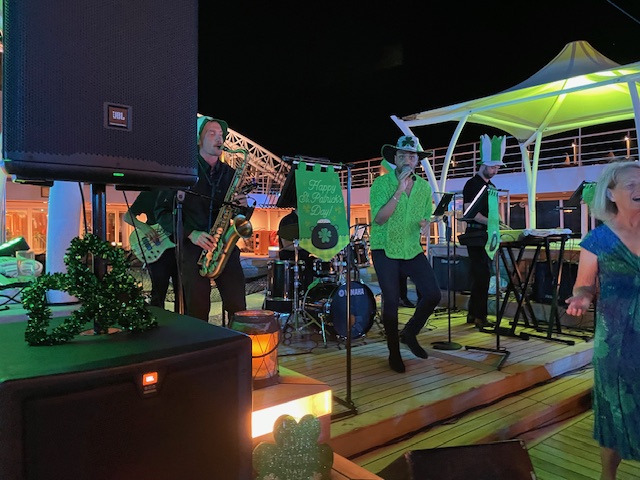
When we got back to the ship, we celebrated St. Patrick’s Day with entertainment by the Cruise Director and the musicians and singers in the various bands on the ship.
On Mar 16, 2024 we anchored in the harbor of Puerto Princesa, Philippines. Puerto Princesa is the capital of the island province of Palawan. The city has been acclaimed several times as the cleanest and greenest city in the Philippines, and it certainly was both compared to the cities and towns that we saw in Indonesia.
The Philippines, officially the Republic of the Philippines, is an archipelagic country in Southeast Asia consisting of more than 7,600 islands, about 2,000 of which are inhabited. To the East is the South China Sea and Vietnam; to the South is Indonesia; and, to the North is China. The population of the Philippines is approximately 110 million people.
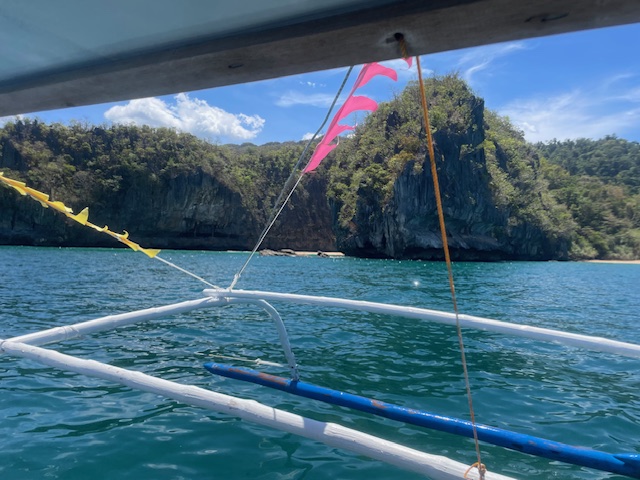
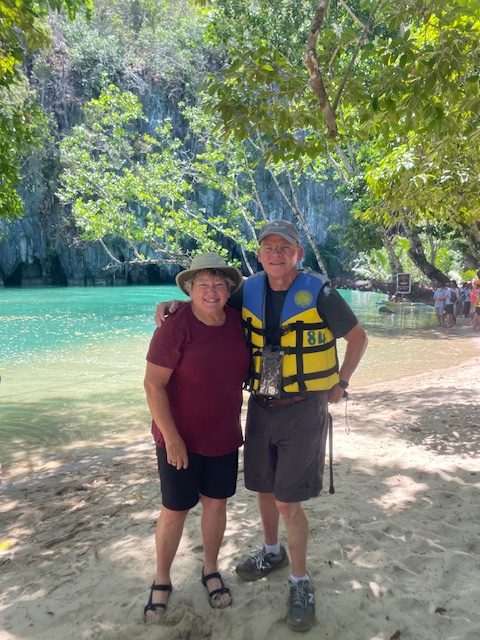
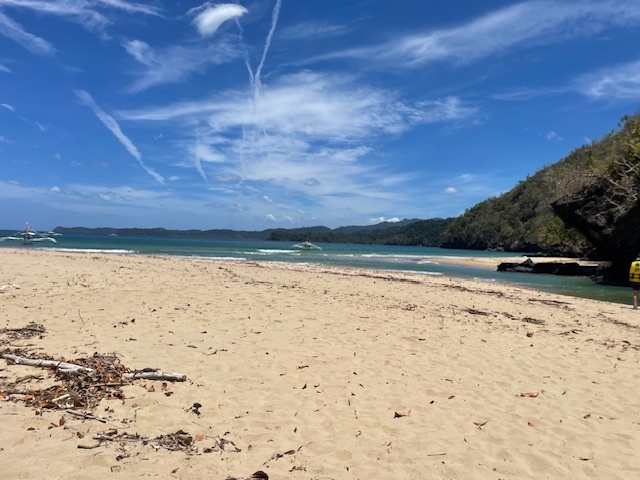
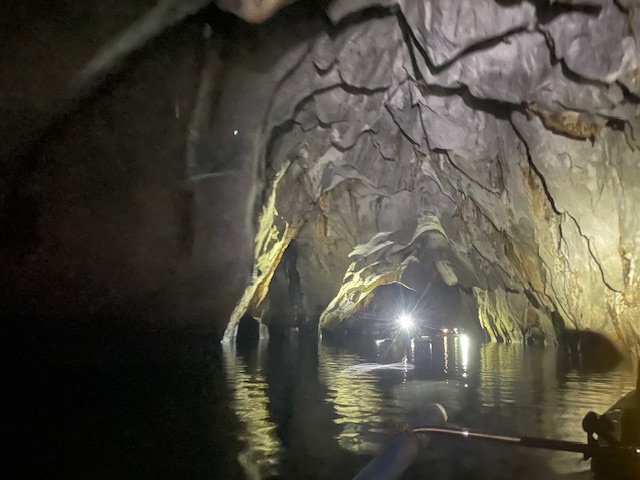
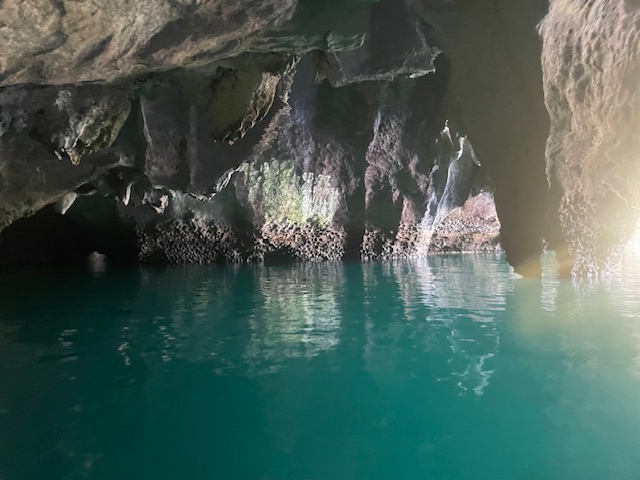
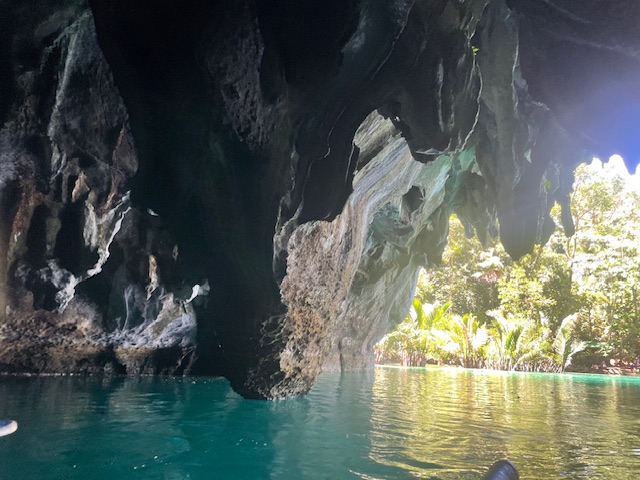
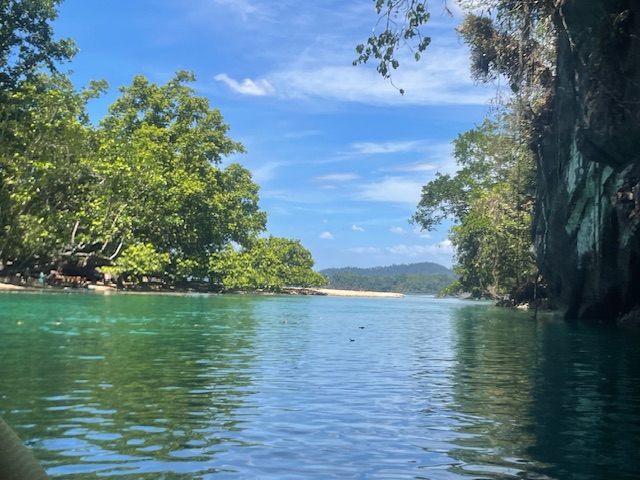
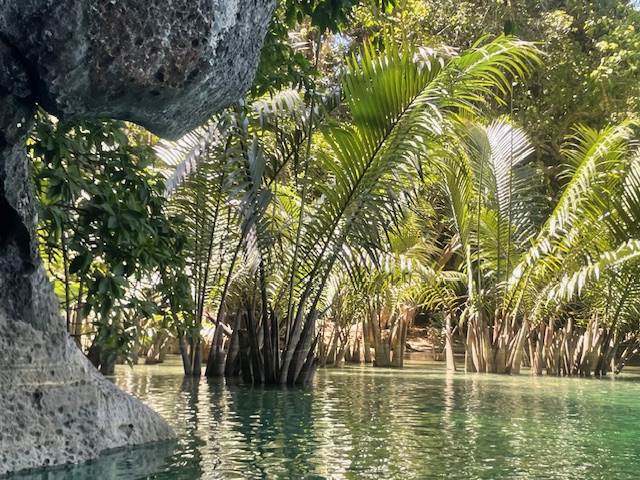
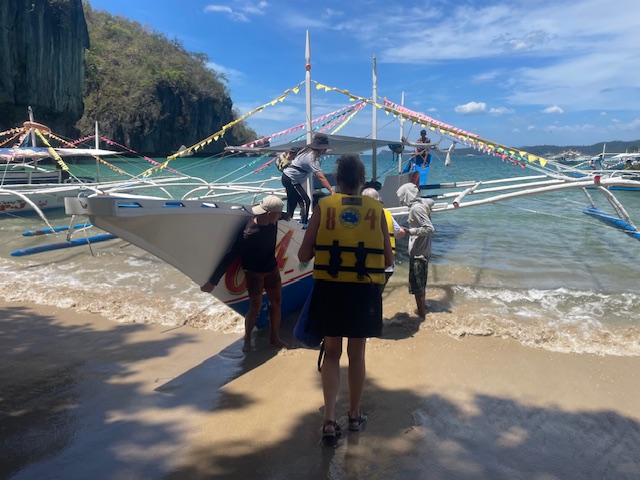
In Puerto Princesa we were on an excursion that took us to the unique Subterranean River National Park, recently named one of the New Seven Natural Wonders of the World. At the Park we gathered at the beach, and took some catamaran-type boats to the entrance of the River.
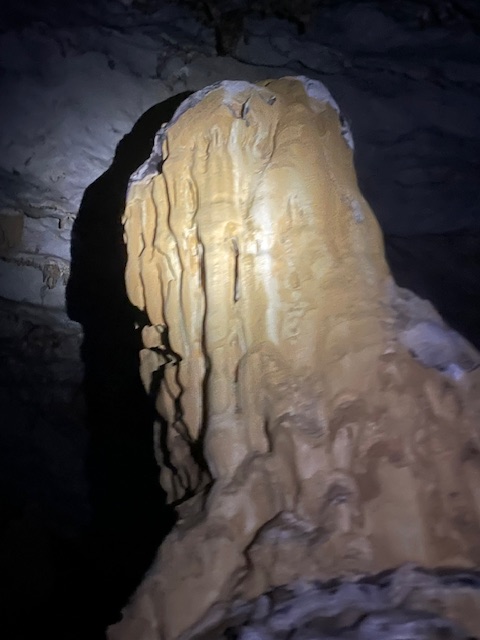
We entered the river, wearing our battle helmets, and traveled 1.5 km. up the river to see mineral rock formations that have been developing over millions of years. , and then reversed course to see more stalactites on the way out. It was really a site to see.
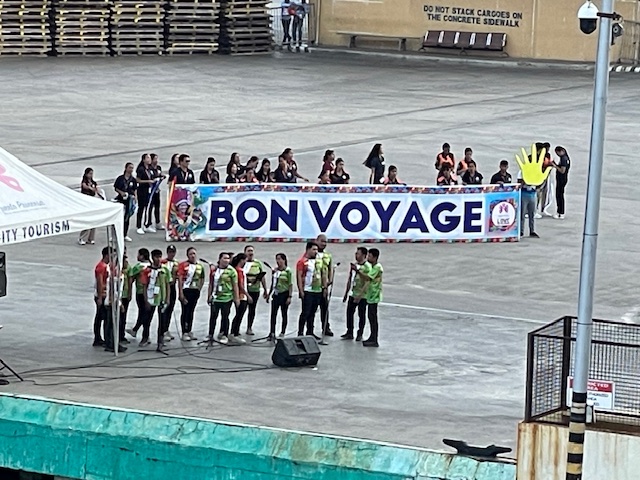
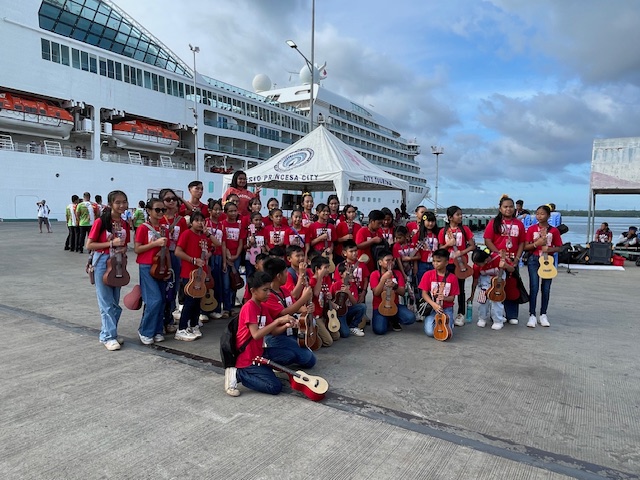
When we returned to the ship, we were greeted by local residents who entertained us from the pier. The evening ended with another beautiful sunset.
We left Ternate, Indonesia on Mar 14, 2024 and are on a two-day voyage on the Sulu Sea to Puerto Princesa in the Philippines. The distance between Ternate and Puerto Princesa is approximately 800 miles.
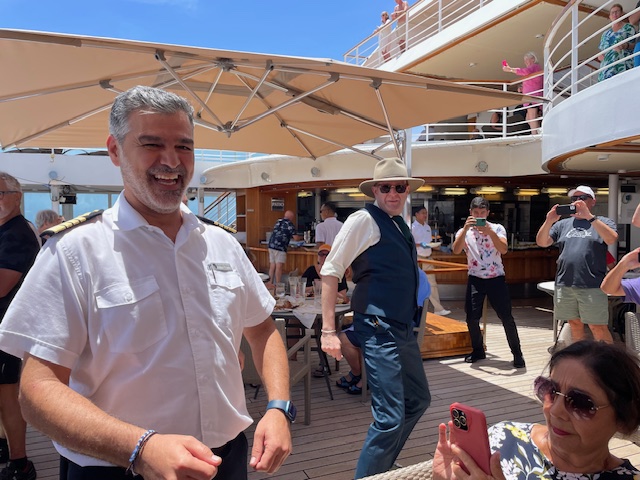
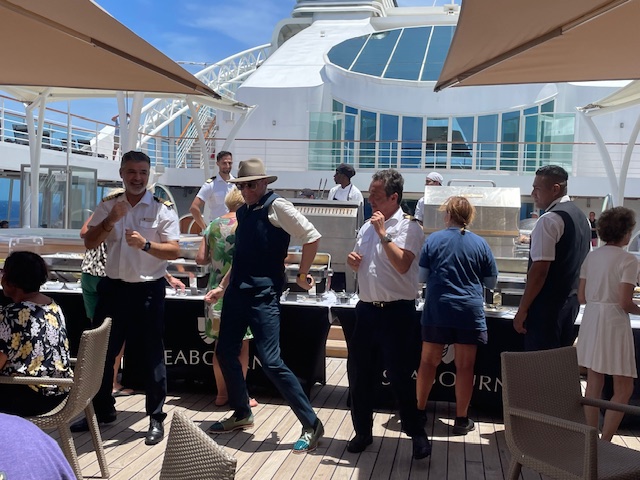
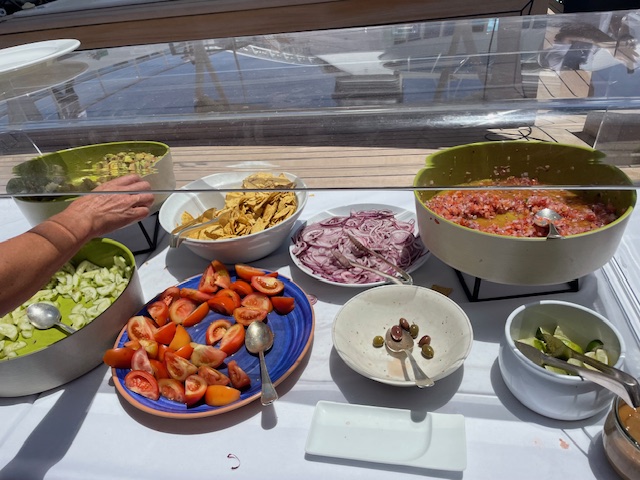
One of the highlights on our sea day was a barbeque lunch on the pool deck with everything imaginable grilled — steaks, lobster, shrimp, chicken and fish — and many salads and tropical drinks. The Captain (Kyriakos) and Cruise Director (Ross) led the crew in dancing for us.
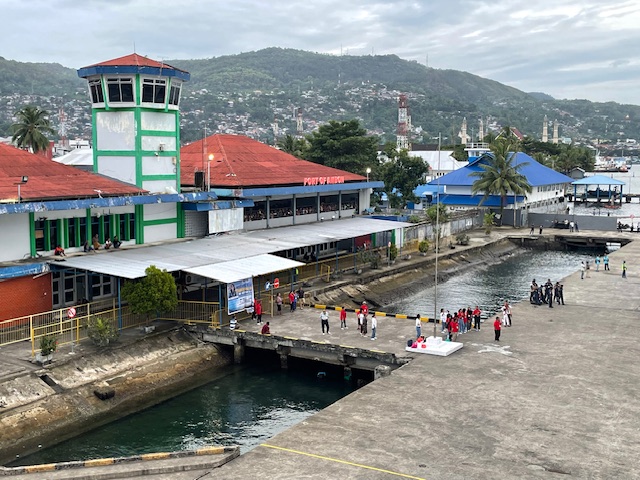
On Mar 13, 2024 we anchored in the harbor of Ternate, Indonesia, which is a city in the Indonesian province of North Maluku. It was the capital of the Sultanate of Ternate in the 15th and 16th centuries, and continues to have a Sultan that oversees social, cultural and religious aspects of the region. Governmental, economic and foreign affairs are handled by the civilian government in Jakarta (formerly known as Batavia). The current Sultan is the 46th Sultan since the founding of the Sultinate.
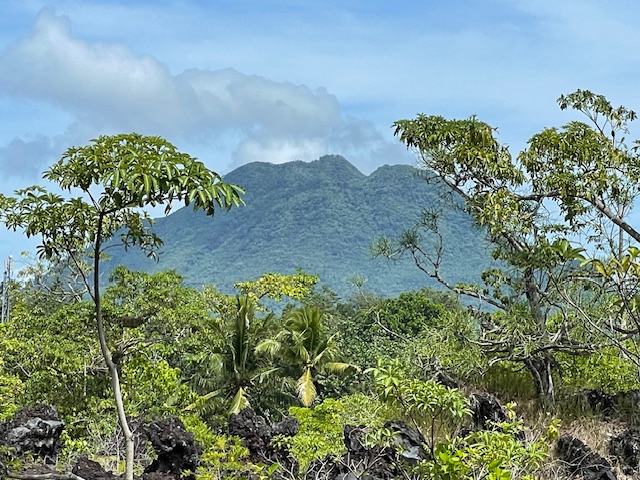
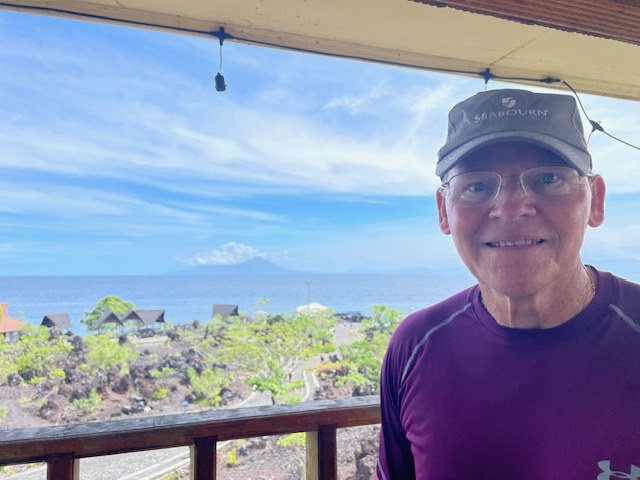
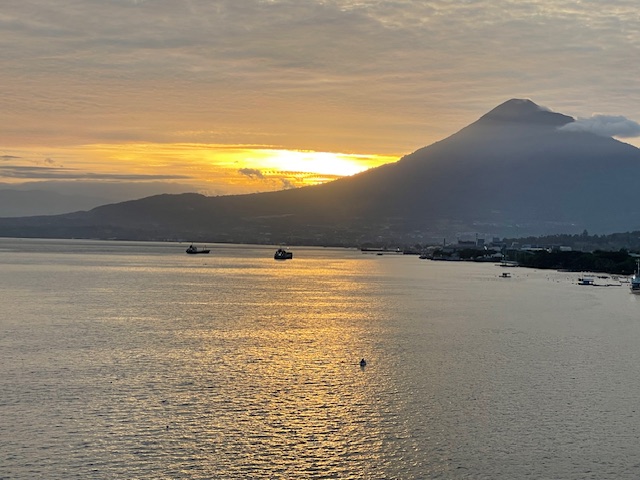
From our ship we could see the core of volcanic Mt. Gamalama which dominates the skyline at more than 5,600 feet in height. The island was the single biggest producer of cloves in the pre-colonial days and clove orchards still ring the mountain.
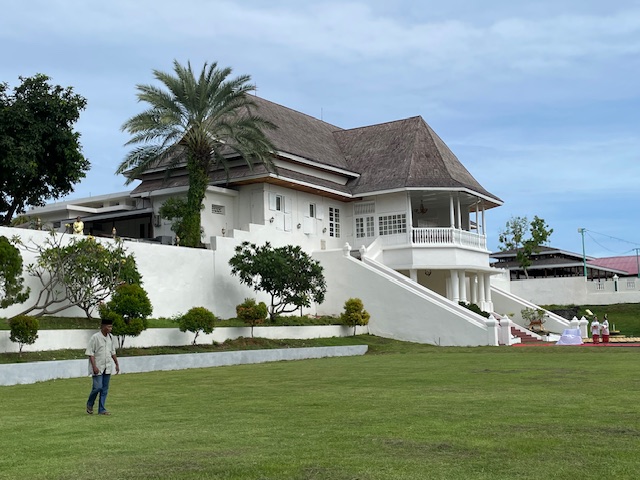
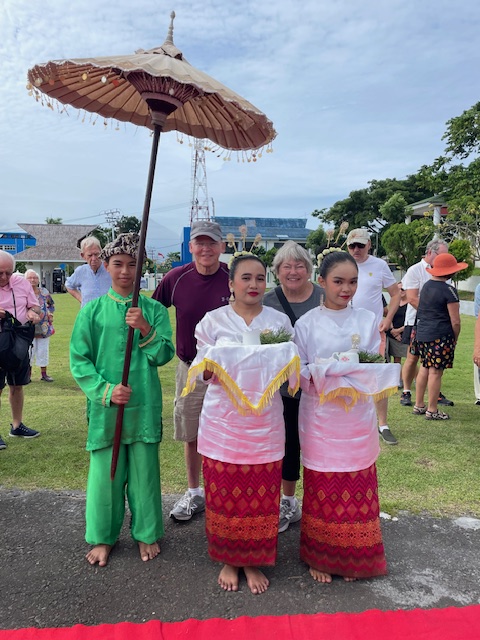
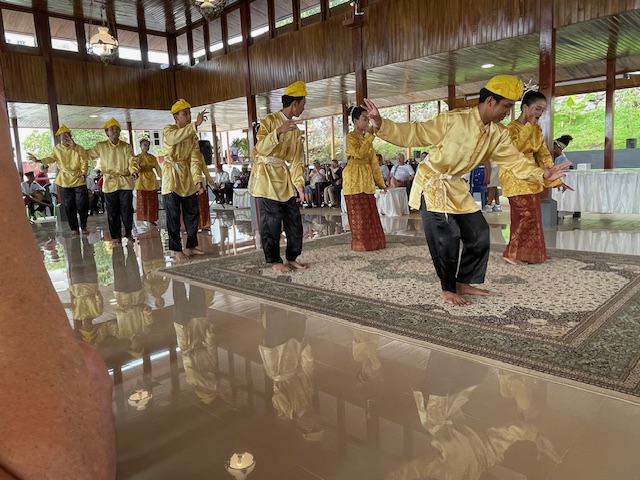
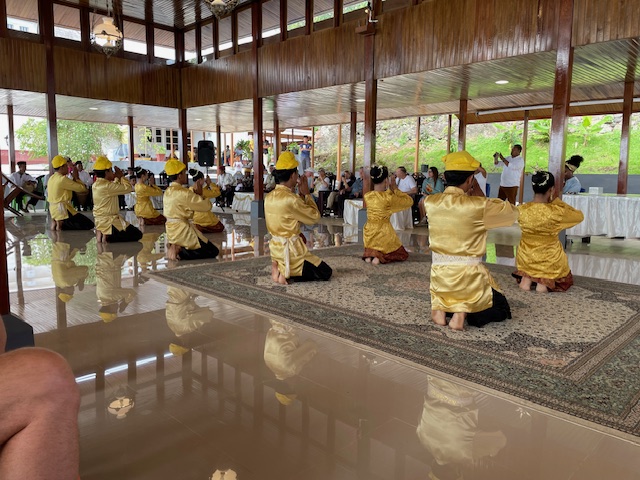
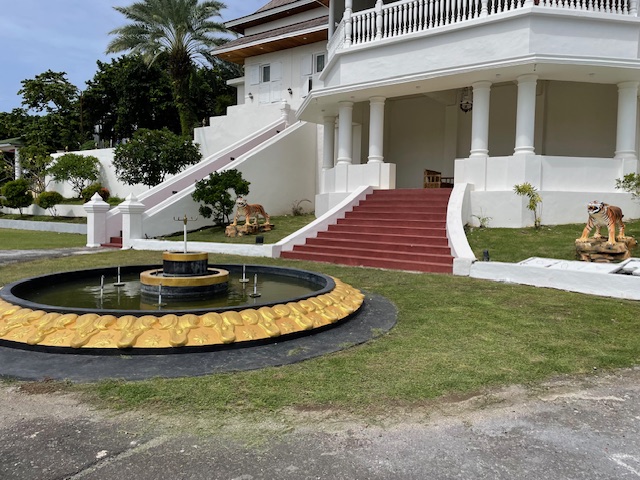
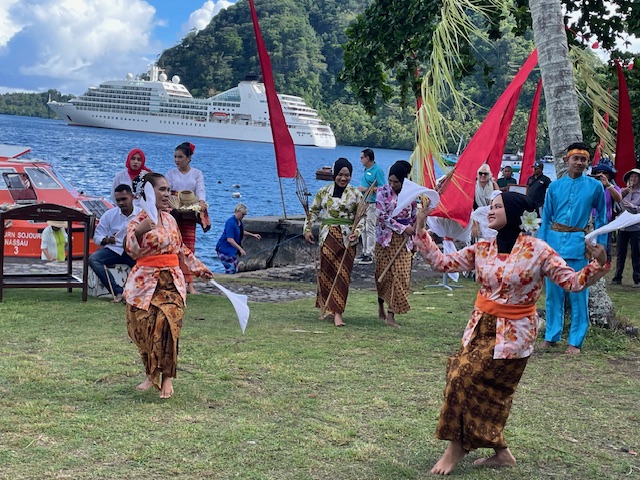
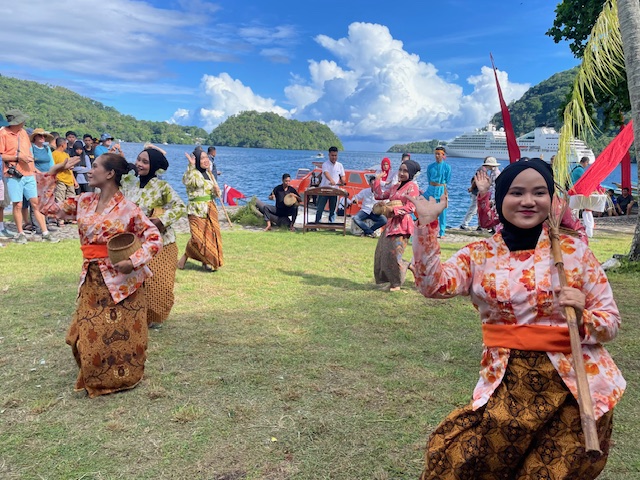
We began our excursion for the day by going to the Sultan’s Palace where we were met by dancers who gave us a formal welcome, and then performed a local dance.
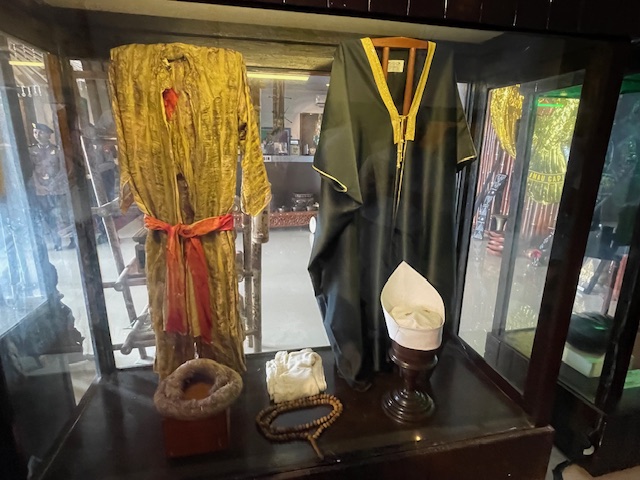
After that we went to a museum on the Sultan’s Palace grounds that contained local artifacts and much information on the history of the Sultinate. It also contained a picture of the current Sultan.
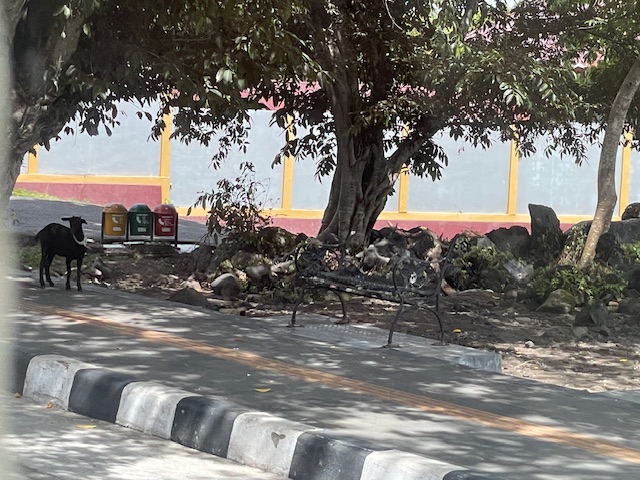
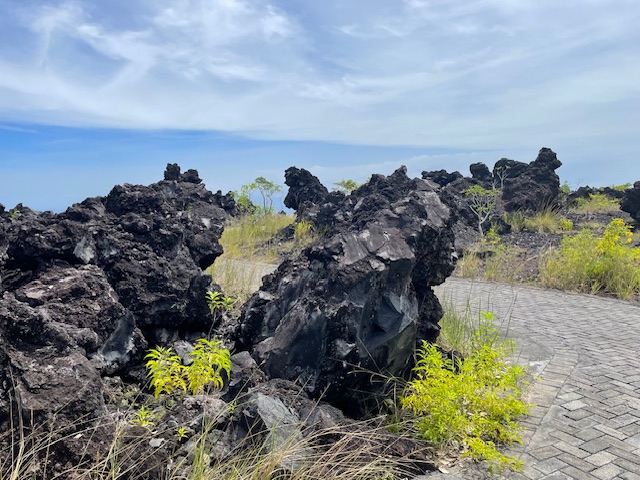
We left the area of the Sultan’s Palace and drove to a park area that is filled with large lava rocks. These large rocks were harvested from lava flows of Mt. Gamalama and used as foundation rocks in the past. Now they just reside at the park and provide nice scenery on a path to the sea.
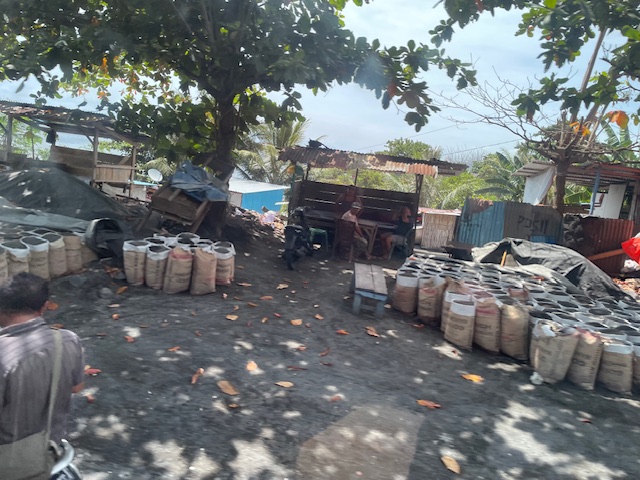
On the way out of the park we past someone who had a local clove and later past an area with cloves that had been gathered and packed.
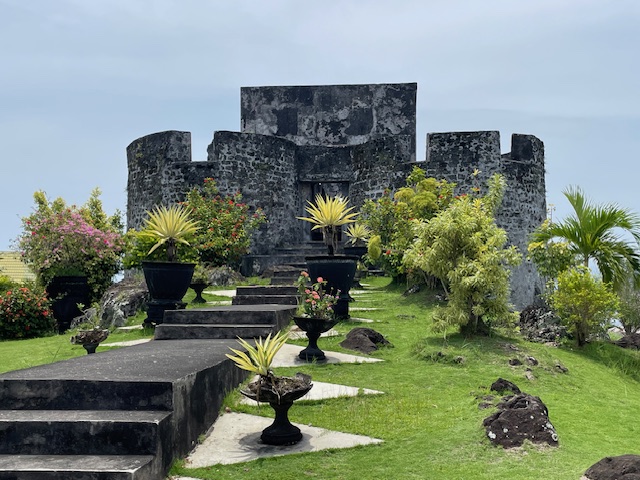
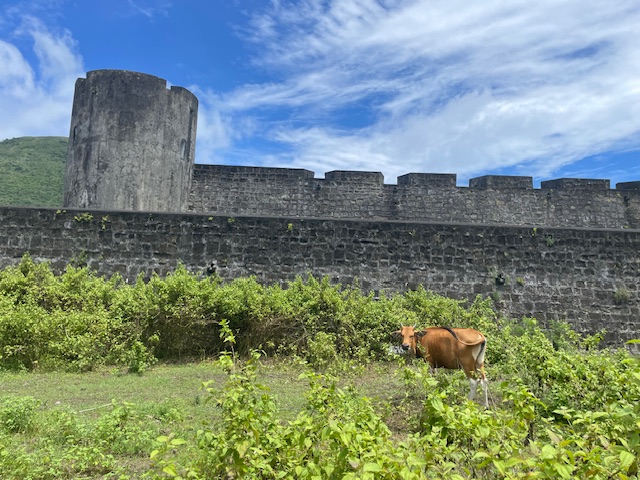
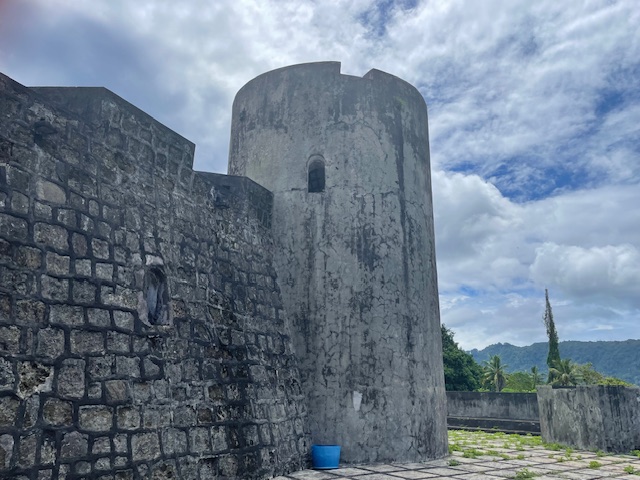
We then headed out to see the remains of Fort Oranje, which the first home of the Dutch East India Company in 1607. The fort was built high on a hill overlooking the harbor to provide defense from the Portuguese and British, and for storage of the valuable cloves.
We then headed back to the port and tendered back to our ship.
On Mar 12, 2024 we docked at Bitung, Indonesia, which is located in the North Sulawesi region of the island of Sulawesi. Bitung is a large port in the southeastern section of North Sulawesi which serves Manado, a city of 480,000 people (1.4 million in the metropolitan area) located in the western side of North Sulawesi.
We left Bitung on an excursion headed to Manado. It was the first time that we experienced a large populated Indonesian area, and it was quite different from the small towns of Banda Neira and Ambon with their narrow streets and generally less maintained areas. Manado was very clean with trees and flowers on many streets and many stores, shops and restaurants in the city center. It is a popular tourist destination because of the many places for diving in the waters of the nearby Savu Sea.
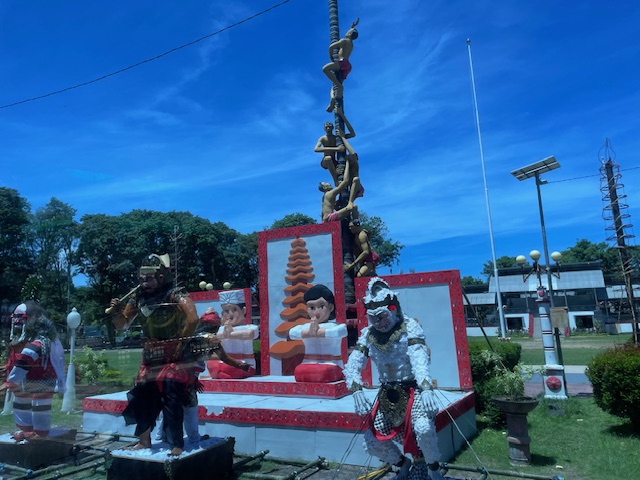
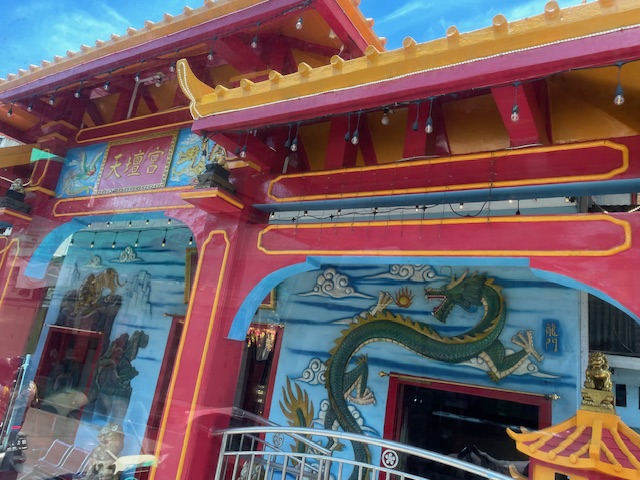
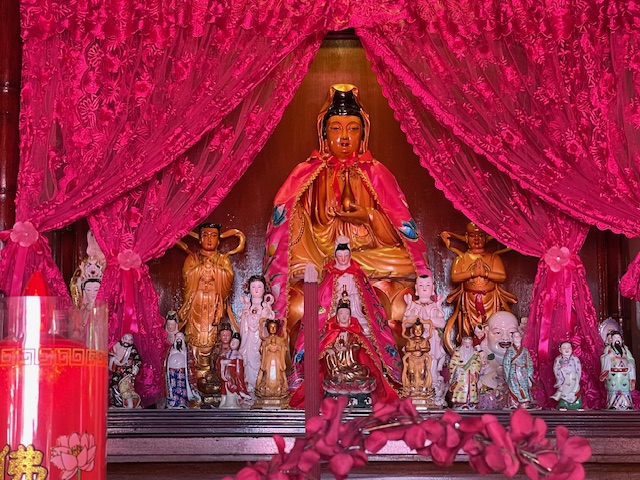
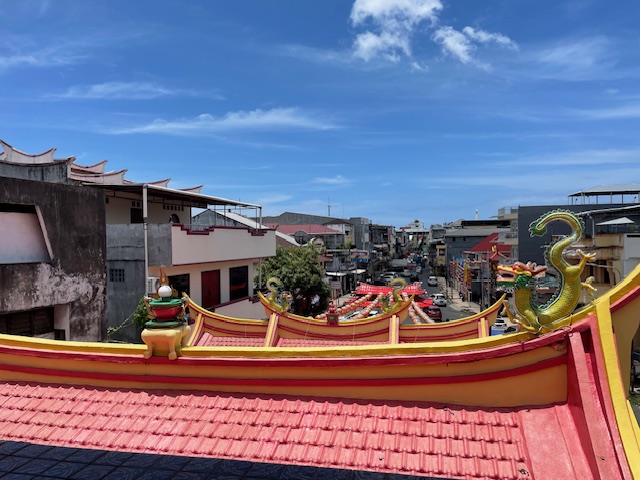
Our first stop in Manado was a Chinese temple, the oldest in Indonesia. We were were greeted by a Chinese dragon and some dancers, and then able to go inside to see the various altars . This particular temple was dedicated to the God of the Sea, and the people practice a combination of Buddhism, Taoism and Confucianism.
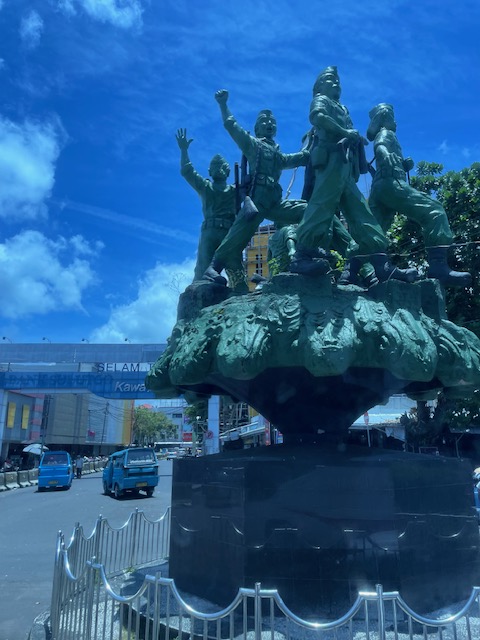
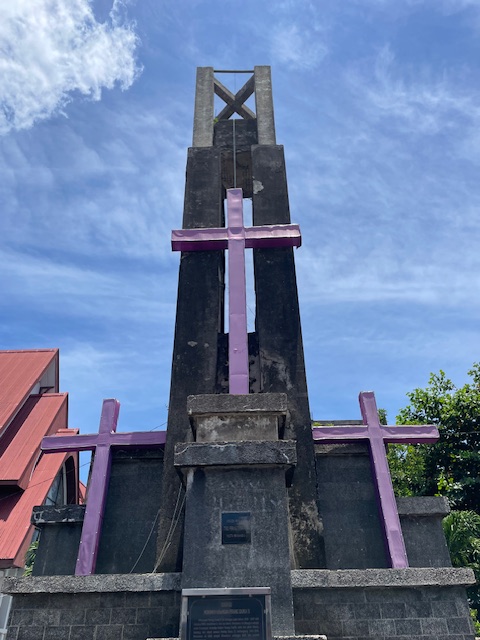
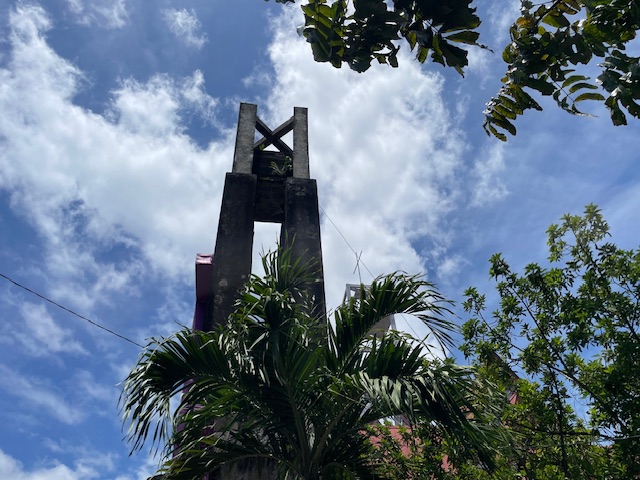
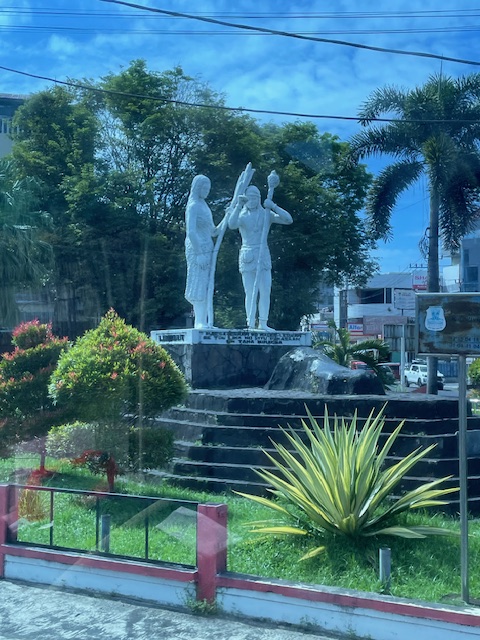
We then drove on through other areas of the city and saw a church and a monument to fallen soldiers of World War II.
We then visited a North Sulawesi government complex and a park with a statue of Christ Blessing. It is one of the tallest statues of Christ in the world at 130 ft. (40 m.).
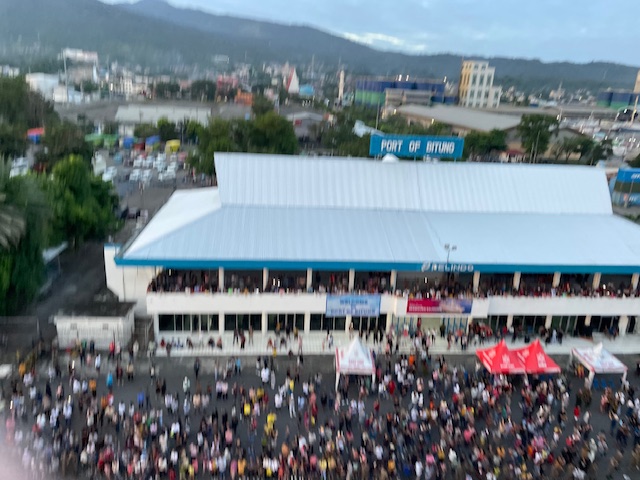
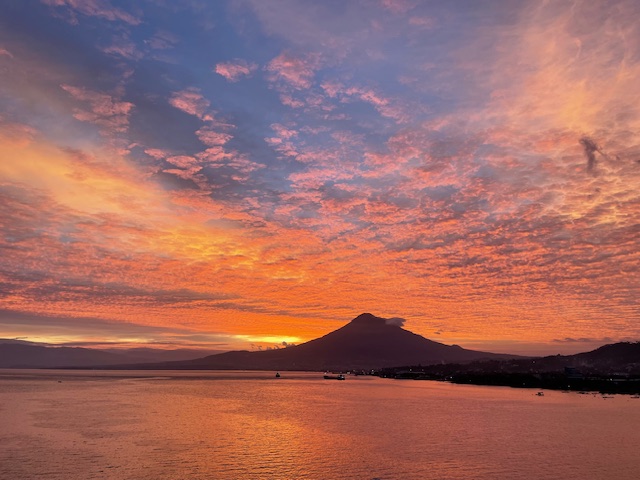
That concluded our visit to Manado and our excursion headed back to our ship in Bitung. We were greeted by hundreds of residents of the city to say farewell to us, and many asked to be photographed with us. That night as we sailed away we saw another beautiful sunset.
On Mar 11, 2024 we were at sea again traveling from Ambon on Maluku Island to Bitung, Indonesia. Along the way we crossed the Equator again, this time heading North. It was a relaxing day. One of the highlights was listening to one of the conversationalist, Terry Greenberg. Terry is a Canadian who graduated with a B.A. degree in East Asia Area Studies from the University of British Columbia. His topic today was on the huge impact of the spice trade and how it completely altered the course of human history giving birth to capitalism, consumerism, globalization and European colonialism.
On Mar 10, 2024, we docked at Ambon, Indonesia. Ambon is in the far East of Indonesia, and is the capital and largest city of the Maluku Islands, and the Indonesian province of Maluku. The Maluku Islands, along with the Banda Islands, which we saw yesterday, were known as the Spice Islands because of the nutmeg, mace and cloves that were exclusive to this area and dominated the spice trade in the 15th and 16th centuries, leading to the eventual European colonialism in the area.
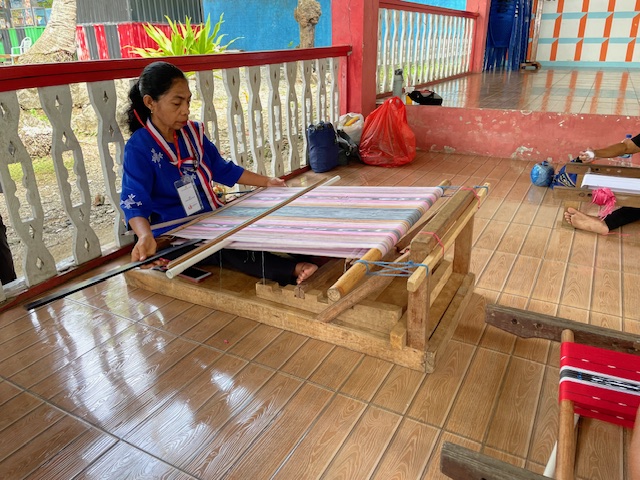
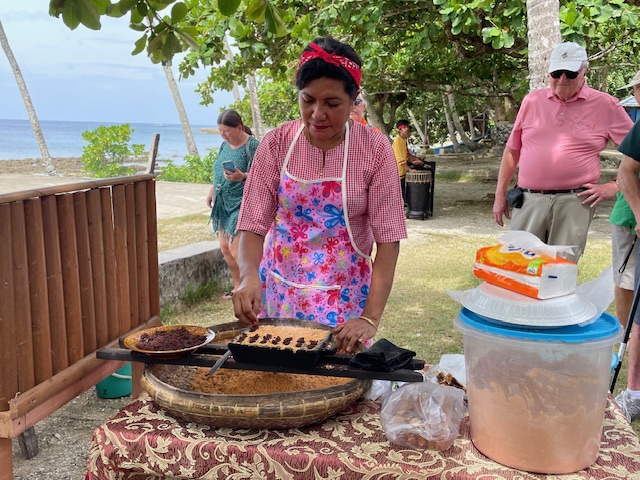
We took an excursion that initially took us to a cultural museum and a beach where we were greeted by local dancers and weavers, and a local woman making candies.
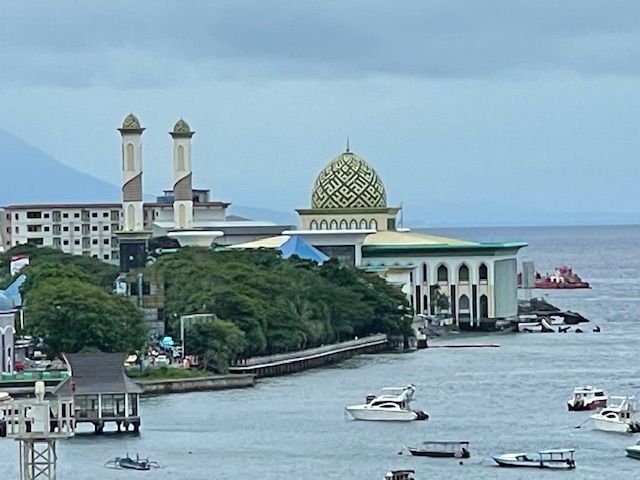
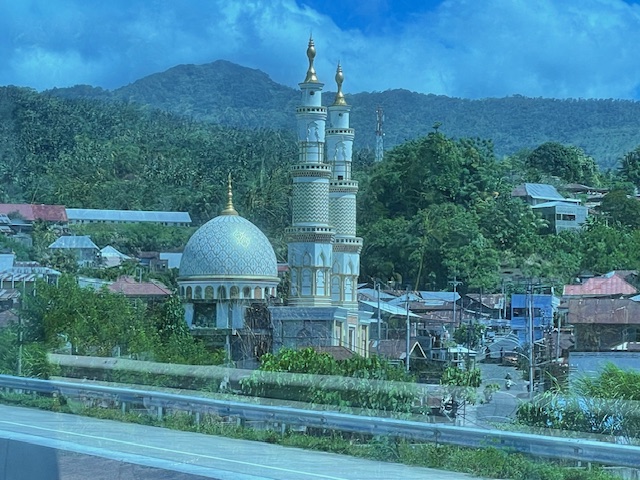
We then drove through the town of Ambon and saw some local churches and mosques before stopping at the Peace Center park where we saw a large World Peace Gong. Walking through the area we spotted a large billboard that welcomed the Seabourn Sojourn to the city. We later found out that it was the first cruise ship that had stopped at the city in three years, and they were very happy to have travelers visiting again.
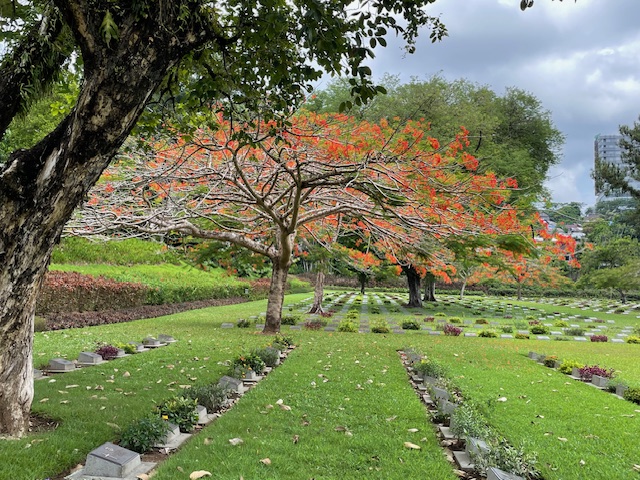
After the park we went to the Ambon War Cemetery. During World II, the region was invaded and occupied by the Japanese; many local Indonesians and Allied servicemen (primarily Australian and Dutch) were killed in various battles. Two British war ships were sunk in the waters. The Cemetery honors all of these military casualties.
We then returned to the port and later that day left Ambon.
On Mar 9, 2024 we anchored in the harbor of Banda Neira, Indonesia, and tendered to shore. Banda Neira is one of ten small volcanic islands located in the Banda Sea about 1,250 miles East of Java. These islands were the original, and until the mid-19th century, the only source of nutmeg and mace in the world. A Portuguese explorer stumbled onto the island archipelago in 1511. They became a critical part of the so-called “spice islands” of Indonesia, a violently contested resource for the colonial powers of the Portuguese, Dutch and English.
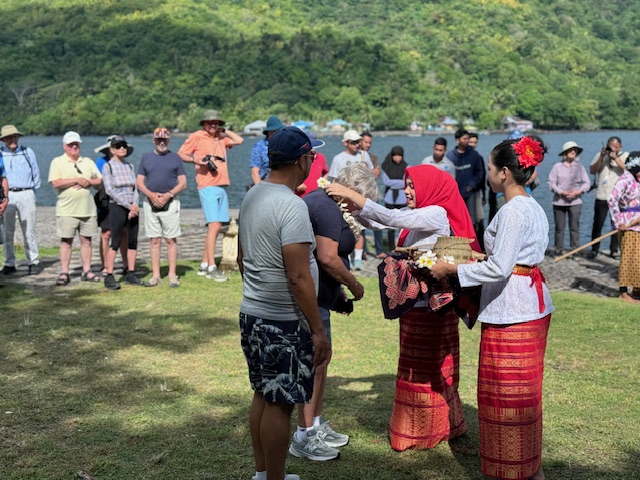
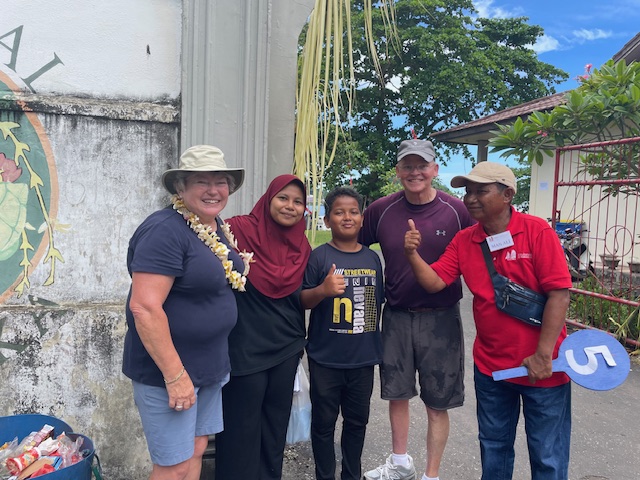
The island of Banda Neira is small so we went on a walking excursion of the island. When we emerged from our tender, we were greeted by local dancers and musicians, and Nancy was chosen to be gifted with a welcoming lei and a hand woven basket.
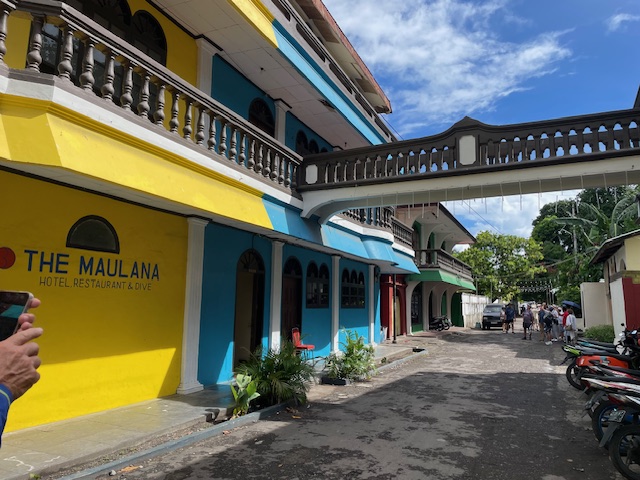
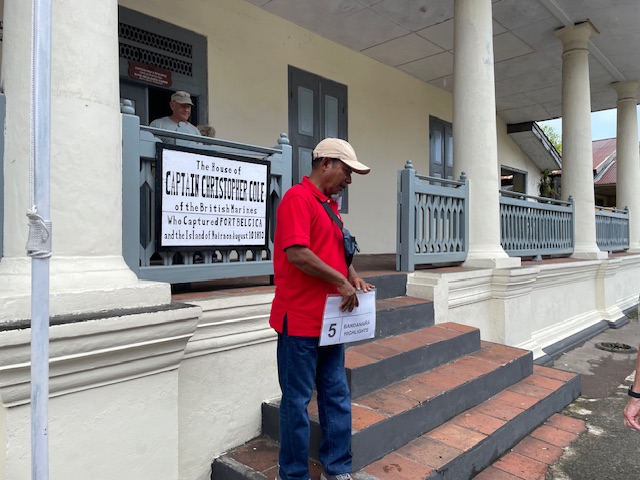
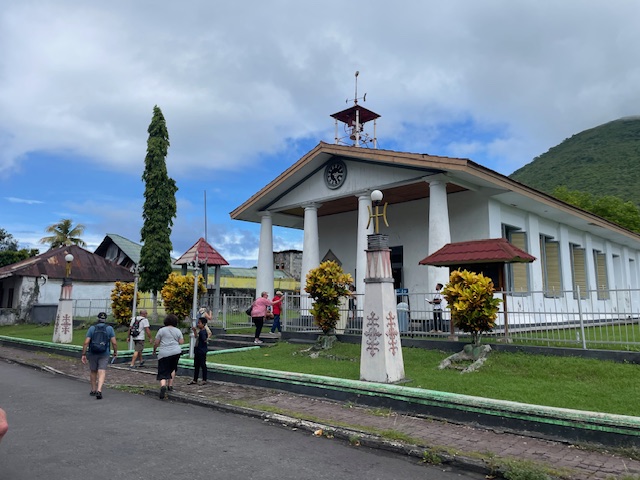
Our guide then led us through the streets of the small town where we were able to see some local houses and shops, as well as some of the old Dutch government buildings.
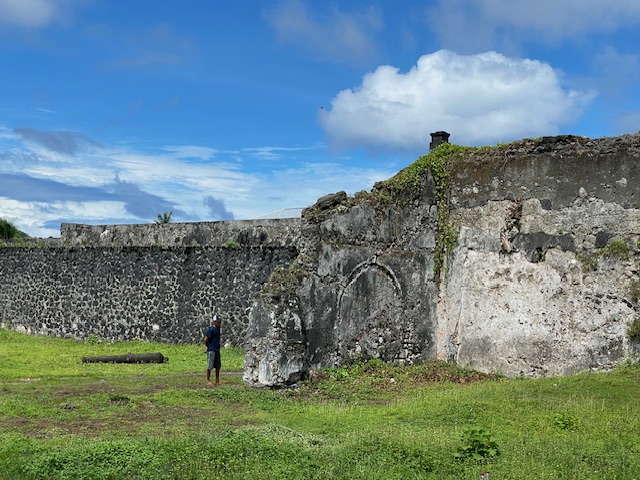
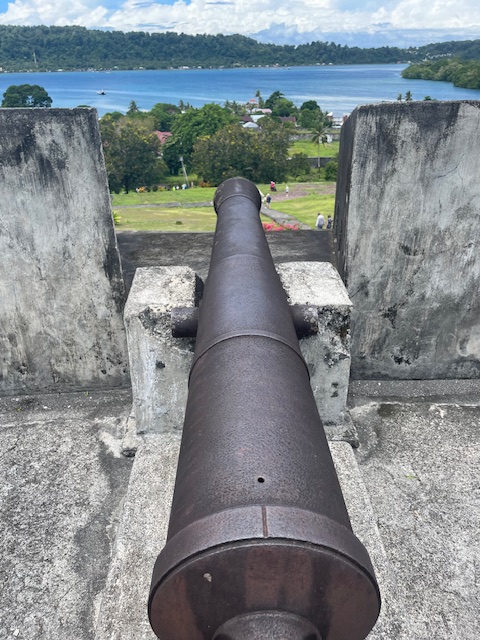
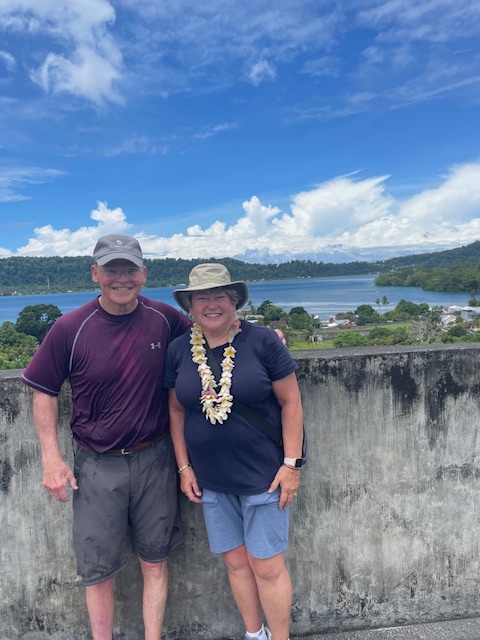
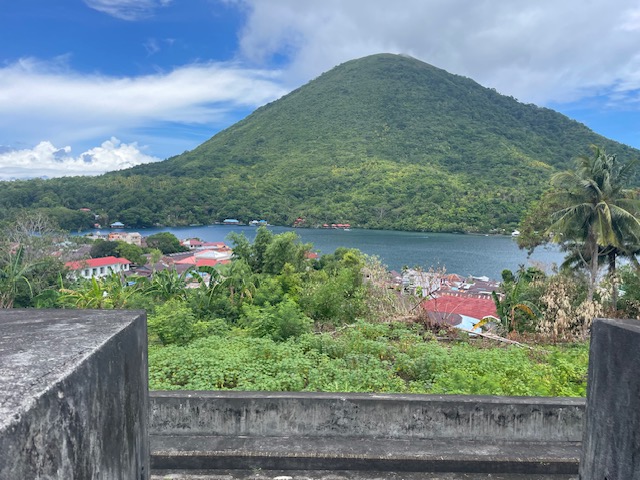
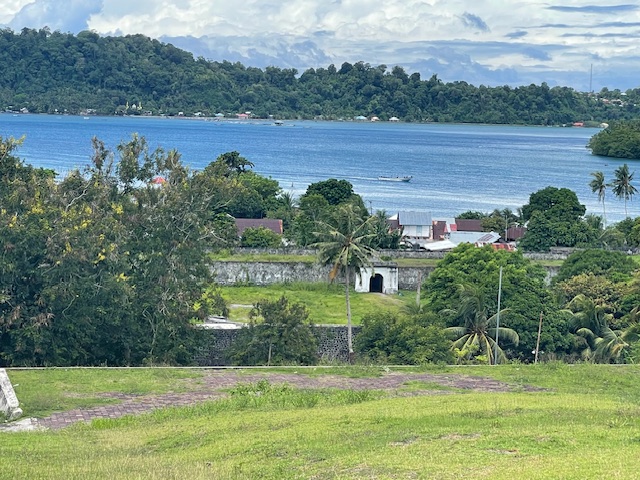
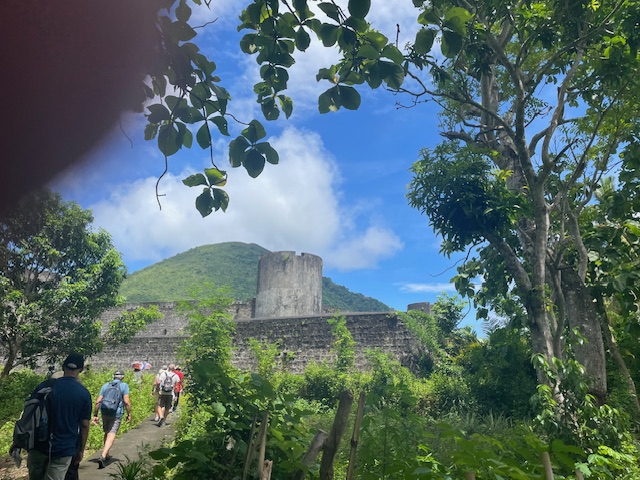
We then went up a hill to the ruins of Fort Belgica, which was a large and imposing fort built centuries ago by the Dutch to consolidate their control of the nutmeg trade and defend against British and Portuguese competitors. The nutmeg trade was the most valuable spice trade in the world at the time, serving as the basis for the vast Dutch East Indies Company, which was the most valuable company in the world. From the fort we had some beautiful views of the island and waters below.
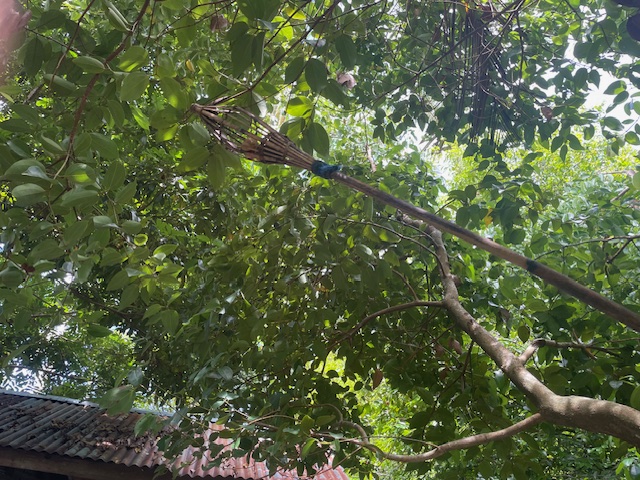
On our way to the fort, we went through a nutmeg orchard. Some of the trees in the orchard were hundreds of years old. Our guide picked a few ripe nutmeg pods from a tree and showed us how the nutmeg is cracked open. The insides of the pods contain a coating that is used to produce brown sugar, and then the nut itself, which consists of a small ball with a red coating. The red coating is removed and is mace, and the remaining ball is ground to produce nutmeg.
We then headed back to the harbor passing a market and saying farewell to our guide, Man-Ali, and his two assistants, Hessanah and Yasir.
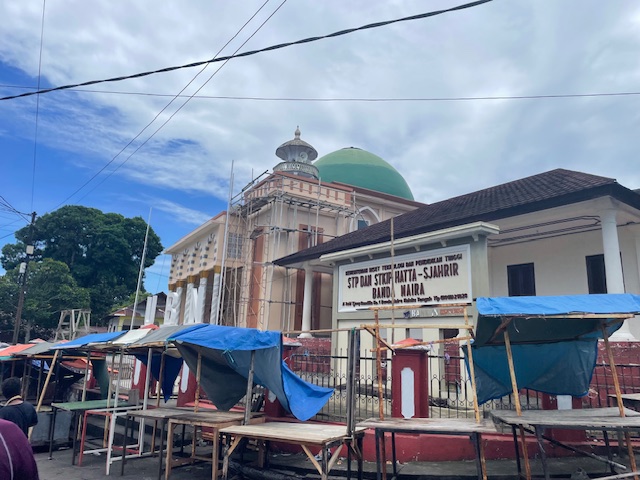
Our day in Banda Neira was very hot and extremely humid, but very enjoyable. It was exactly the type of small town and atmosphere that we expected to see in Indonesia. The town was relatively small with narrow roads (we only saw one car, but many motor scooters), and it was clean and well kept, despite being very poor.






























































 World Cruise - 2024